
Science Highlights
Discovery of super-Alfvénic oscillations in solar type-III radio bursts
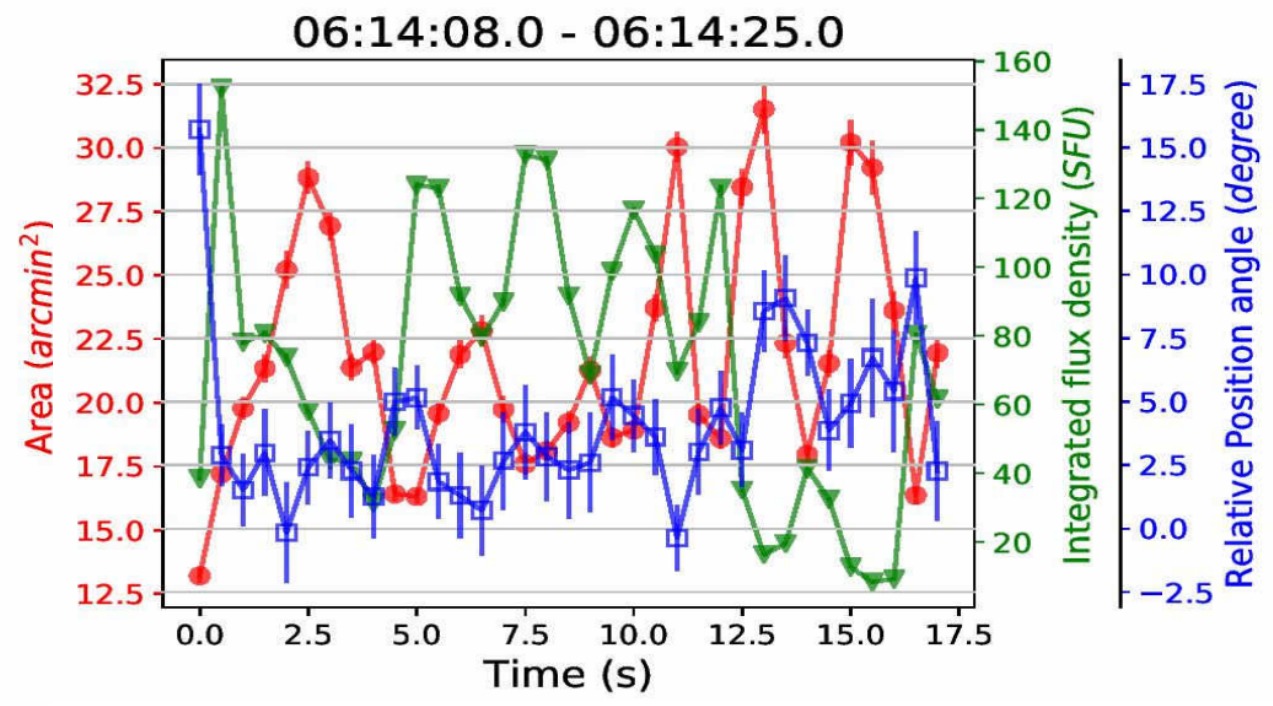
At the site of their origin, solar metrewave radio bursts contain pristine information about the local coronal magnetic field and plasma parameters. On its way through the turbulent corona, this radiation gets substantially modified due to propagation effects. Effectively disentangling the intrinsic variations in emission from propagation effects has remained a challenge. Mohan et al. demonstrate a way to achieve this, using snapshot spectroscopic imaging study of weak type III bursts using data from the Murchison Widefield Array. All of the imaging for this work was done using AIRCARS, the automated solar radio imaging pipeline developed by the NCRA Solar Physics group. This study has lead to the discovery of second-scale Quasi-Periodic Oscillations (QPOs) in burst source sizes and orientation with simultaneous QPOs in intensity. Though the QPOs in intensity were previously known, they had never been imaged. In absence of any information about their size, these rapid oscillations were usually interpreted as a particular mode of magnetohydro-dynamic (MHD) oscillations in the coronal plasma. Their imaging lead to the realisation that the observed oscillations in source sizes are so large that the required speeds are two orders of magnitude larger than the typical Alfvén speeds expected at these coronal heights. This study thus rules out MHD oscillations and implies the presence of a quasi-periodic regulation mechanism operating much deeper in the corona. In addition, this study has also provided, for the first time, a way to quantify the density inhomogeneities in the low corona. The figure shows the variation in the area of the source of type III emission (red) and its intensity (green) measured in Solar Flux Units (1 SFU = 10,000 Jy) as a function of time for one of the six groups of type III bursts studied. The anti-correlation between the size and intensity time series is evident. QPOs in the orientation of the source of type III emission are also seen (blue).
An unsupervised imaging pipeline for generation of high dynamic range solar radio images
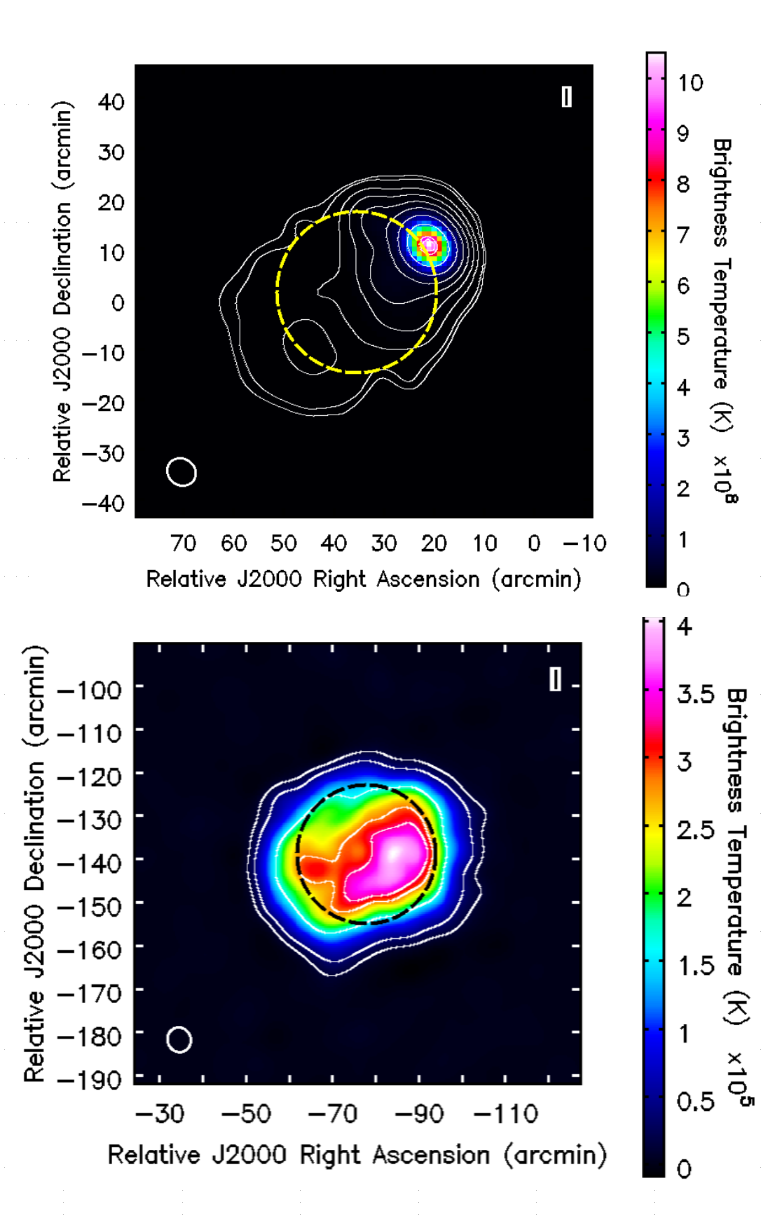
Solar radio emission, especially at metre-wavelengths, is well known to vary over small spectral (< 100 kHz) and temporal (< 1 s) spans. With the new generation of instruments, it is now becoming possible to capture data with sufficient resolution (temporal, spectral and angular) that one can begin to characterize the solar morphology simultaneously along the axes of time and frequency. This, however, requires one to make around a million images per hour and renders the usual manual effort intensive approach impractical. The authors have hence developed an end-to-end imaging pipeline optimized for solar imaging - “Automated Imaging Routine for Compact Arrays for the Radio Sun (AIRCARS)â€. They demonstrate AIRCARS on data from the Murchison Widefield Array (MWA). The dynamic range of the output images routinely varies from a few hundred to a few thousand. In the few cases, where they have pushed AIRCARS to its limits, the dynamic range can reach as high as ~100,000. These are now the highest dynamic range solar radio images at metre wavelengths, and are enabling exploration of pristine and interesting phase space. AIRCARS has the potential to transform the multi-petabyte MWA solar archive of raw data into science-ready images. AIRCARS can also be tuned to upcoming telescopes like the Square Kilometre Array, making it a very useful tool for the heliophysics community. The figure shows example AIRCARS images spanning the extremes of solar radio emissions. The bright compact emission seen in the top panel comes from a type II radio burst and the image has dynamic range of ~100,000. At a brightness temperature of roughly 1 billion K, it outshines the solar disc by about four orders of magnitude. The lower panel shows the Sun during a quite phase, when the brightness does not vary greatly across the disc. The dynamic range of this image is ~1,000.
A VLA-GMRT look at 11 FR-II Quasars
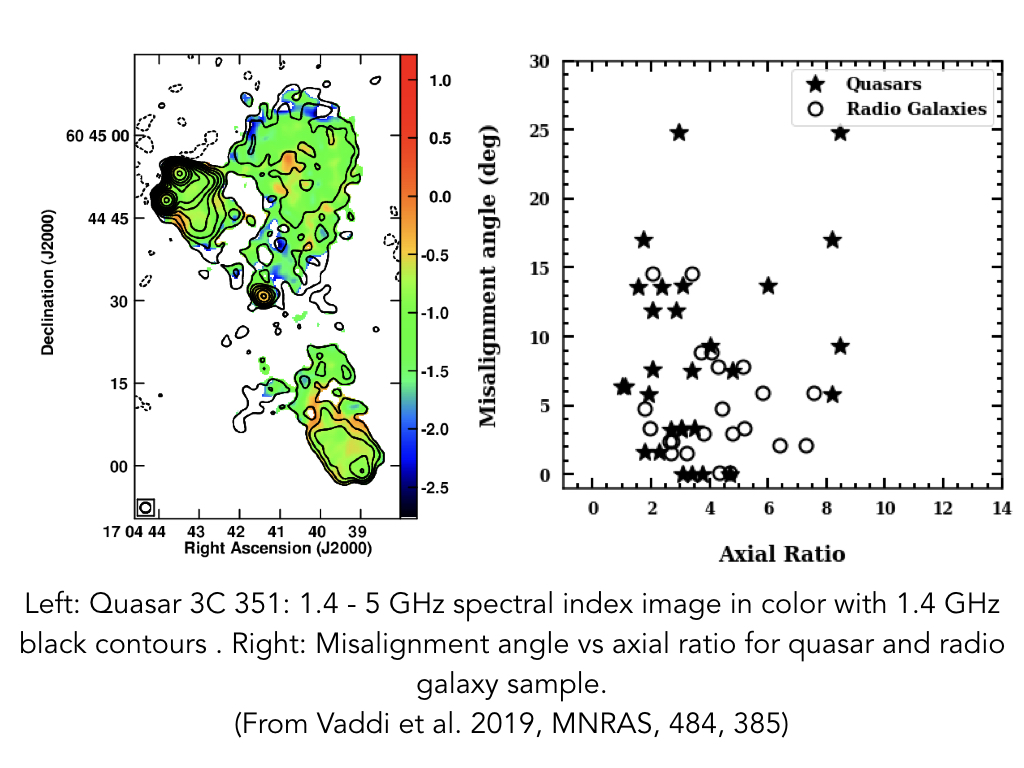
Active Galactic Nuclei (AGNs) are a special class of galaxies that emit enormous amounts of energy from the nuclear region. There are several variants of AGNs classified based on their observed properties. Detailed observations of AGNs over two decades have suggested that AGNs are intrinsically similar objects, but may appear different due to different viewing angles; this idea is now known as the AGN unification scheme. Vaddi et al. address the unification of radio-loud AGNs via statistical and spectral analysis approaches. A sample of 11 steep-spectrum radio quasars and 13 Fanaroff-Riley-II radio galaxies that span similar luminosity and redshift ranges were used for this study. Matched resolution radio data for the quasars were obtained using the Jansky Very Large Array. The results are in general agreement with orientation-based AGN unification. However, the authors find that environmental effects cannot be ignored. The lack of correlation between the statistical orientation indicators such as misalignment angle and radio core prominence (see the figure), and the larger lobe distortions in quasars compared to radio galaxies suggest that additional intrinsic or environment effects are at play.
A Long-term study of three rotating radio transients
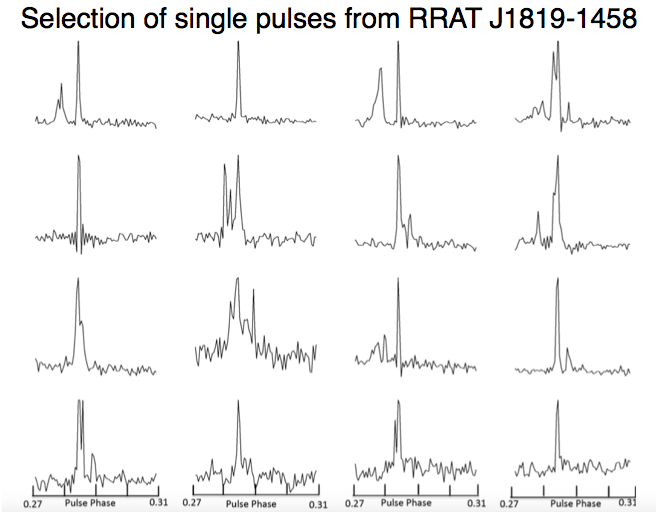
Occasional flashes of dispersed radio emission of typically a few milliseconds duration are detected from Rotating Radio Transients (RRATs). The nature of these RRATs, and their association with the rest of the neutron star population is still an open question. Bhattacharyya et al. present the longest-term timing study so far of three RRATs -- J1819-1458, J1840-1419 and J1913+1330 -- performed with the Lovell, Parkes and Green Bank telescopes over the past decade. Investigation of long-term variations of the pulse emission rate from these RRATs brings out a marginal indication of a long-term increase in the pulse detection rate with time for PSR J1819-1458 and J1913+1330. Conversely, a variation of the pulse detection rate of two orders of magnitude is observed between different epochs for PSR J1913+1330. The study also detected, for the first time, a weak persistent mode in PSR J1913+1330, in addition to the RRAT pulses, suggesting a possible connection between RRATs and the normal pulsar population. Although frequency-glitches are commonly seen for pulsars, PSR J1819-1458 is the only RRAT to exhibit glitches; a selection of its pulses is shown in the figure. The authors study the post-glitch timing properties of PSR J1819-1458 in detail and discuss implications of this study for glitch models. Its post-glitch over-recovery of the frequency derivative is magnetar-like; similar behaviour is only observed for two other pulsars, both of which have relatively high magnetic field strengths. Following the over-recovery, the authors find that some fraction of the pre-glitch frequency derivative is gradually recovered. It will be interesting to know if these glitches are representative of RRATs. This can only be verified with regular monitoring to detect possible glitches in other RRATs.Â
Angular momentum of dwarf galaxies
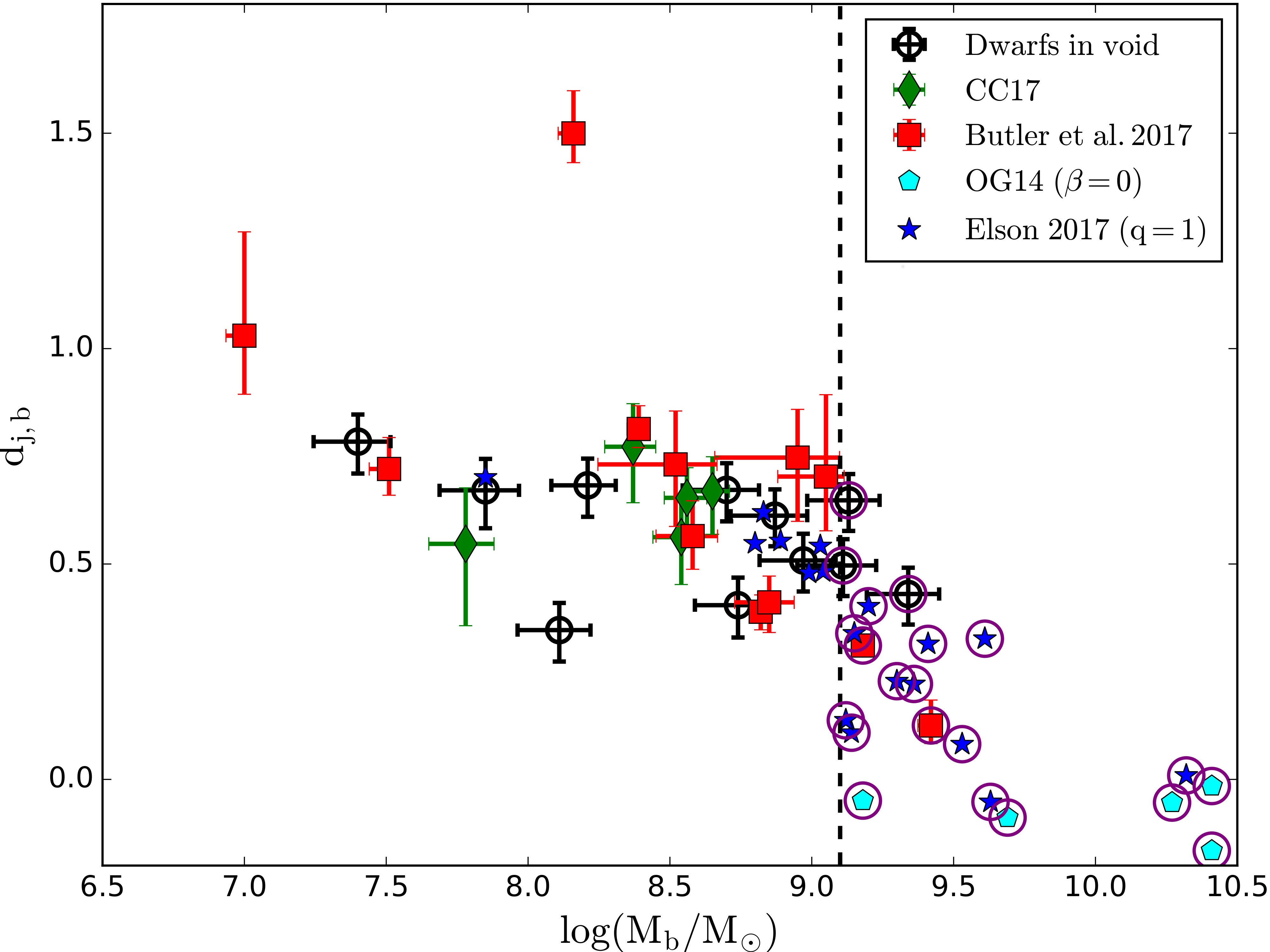
Mass and specific angular momentum are two fundamental physical parameters of galaxies. Kurapati et al. (2018) use high-resolution HI 21cm observations and broad band photometry to measure the baryonic mass (M) and baryonic specific angular momentum (j) of 11 dwarf galaxies that lie in the Lynx-Cancer void. They find that the specific angular momentum of void dwarf galaxies is similar to that of other dwarf galaxies in average density environments. However, all dwarf galaxies (regardless of environment) have significantly higher specific angular momentum than expected from an extrapolation of the relation between specific angular momentum and baryonic mass for large spiral galaxies. The figure shows the difference between the observed specific angular momentum of dwarf galaxies and the specific angular momentum expected from the bulge-less spiral relation, as a function of baryonic mass. The elevation in specific angular momentum occurs for dwarf galaxies with masses lower than roughly a billion solar masses. Galaxies above this mass threshold have relatively low baryonic specific angular momenta, following the relation obtained for massive galaxies with zero bulge fraction. Interestingly, the above mass threshold is very similar to the mass below which galaxy discs start to become systematically thick. Kurapati et al. examine the possibility that both these effects, viz. the thickening of disks and the increase in specific angular momentum, are results of feedback from star formation. Such feedback would preferentially remove the low angular momentum gas from the central parts of dwarfs (thus increasing the specific angular momentum of the system) and also inject mechanical energy into the system, leading to thicker discs. They find however, that the observed amount of observed star formation in their sample galaxies is insufficient to produce the observed increase in the specific angular momentum. It hence appears that some other, as yet unknown mechanism, plays a role in producing the observed enhancement in specific angular momentum.
Detection of the Galactic warm neutral medium in HI 21cm absorption
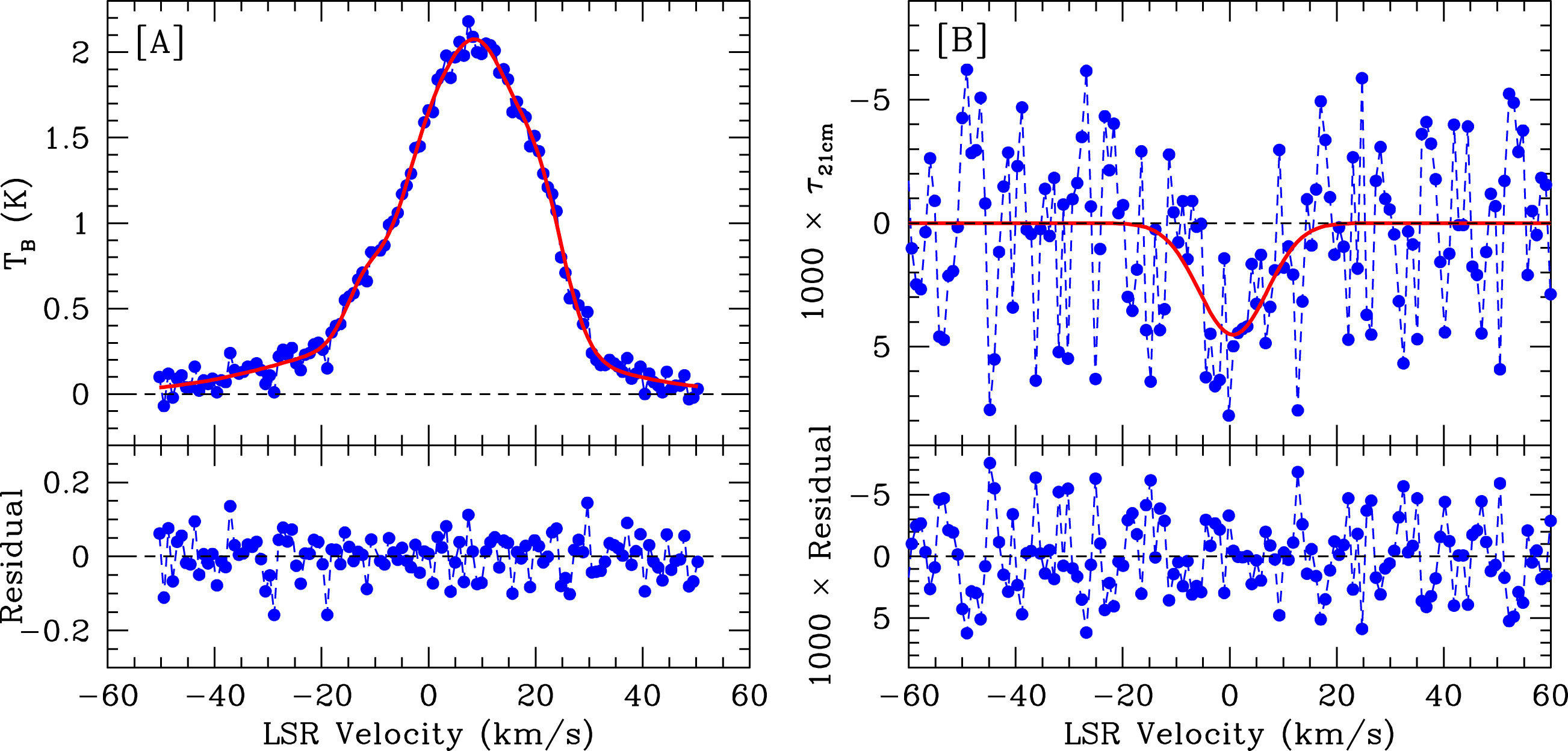
Patra et al. report a deep GMRT search for Galactic HI 21-cm absorption towards the quasar B0438-436, yielding the detection of wide, weak HI 21-cm absorption, with a velocity-integrated HI 21-cm optical depth of 0.0188 +/- 0.0036 km/s. Comparing this with the HI column density measured in the Parkes Galactic All-Sky Survey gives a column density-weighted harmonic mean spin temperature of 3760 +/- 365 K, one of the highest measured in the Galaxy. This is consistent with most of the HI along the sightline arising in the stable warm neutral medium. The low-peak HI 21-cm optical depth towards B0438-436 implies negligible self-absorption, allowing a multi-Gaussian joint decomposition of the HI 21-cm absorption and emission spectra. This yields a gas kinetic temperature T_k <= (4910 +/- 1900) K, and a spin temperature T_s = (1000 +/- 345) K for the gas that gives rise to the HI 21-cm absorption. The GMRT data are consistent with the HI 21-cm absorption arising from either the stable WNM, with T_s << T_k, T_k~5000 K, and little penetration of the background Lyman-alpha radiation field into the neutral hydrogen, or the unstable neutral medium, with T_sT_k~1000 K. The figure shows results of the multi-Gaussian joint decomposition of the (A) HI 21-cm emission and (B) HI 21-cm absorption spectra. The top panels show the best-fit model (solid curve) overlaid on the two spectra, while the bottom two panels show the residuals from the fit.
Probing Star Formation in Galaxies at z~1
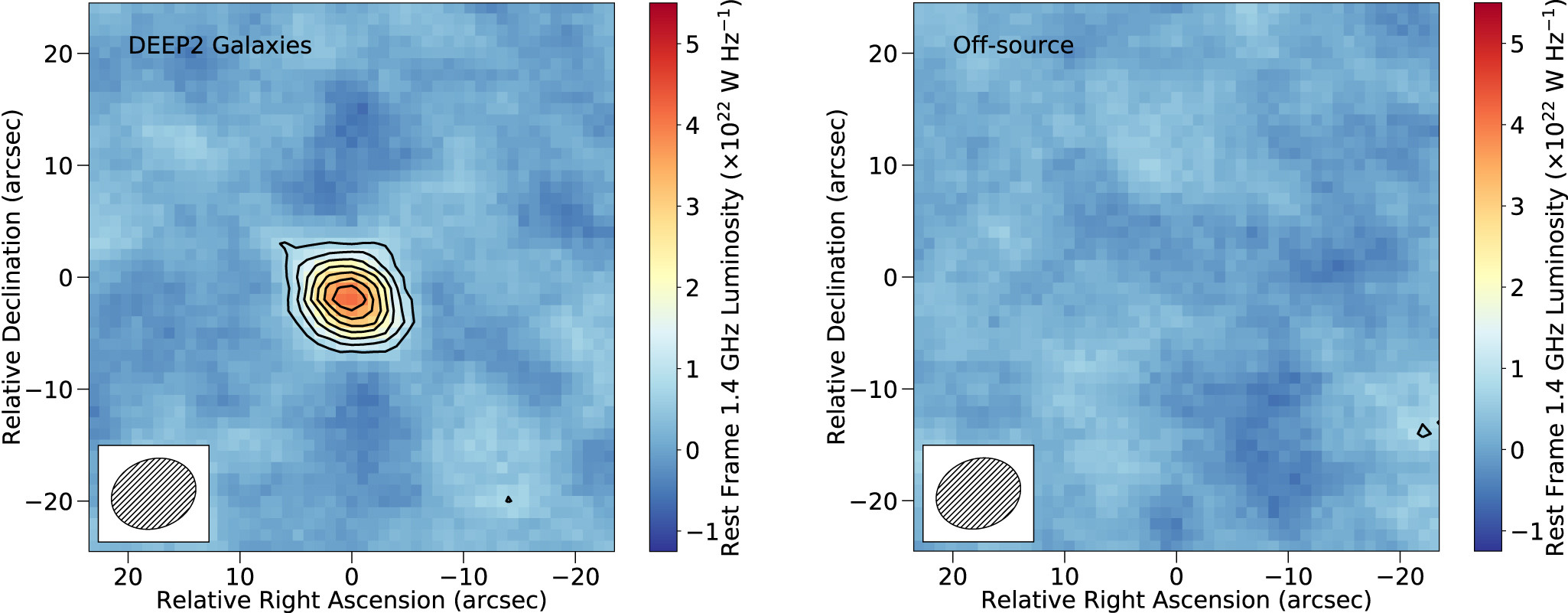
Bera et al. carried out deep GMRT 610 MHz imaging of four fields of the DEEP2 Galaxy Redshift Survey, and stacked the radio emission from a sample of nearly 4000 blue star-forming galaxies at 0.7
A Post-correlation Beamformer for Time-domain Studies of Pulsars and Transients
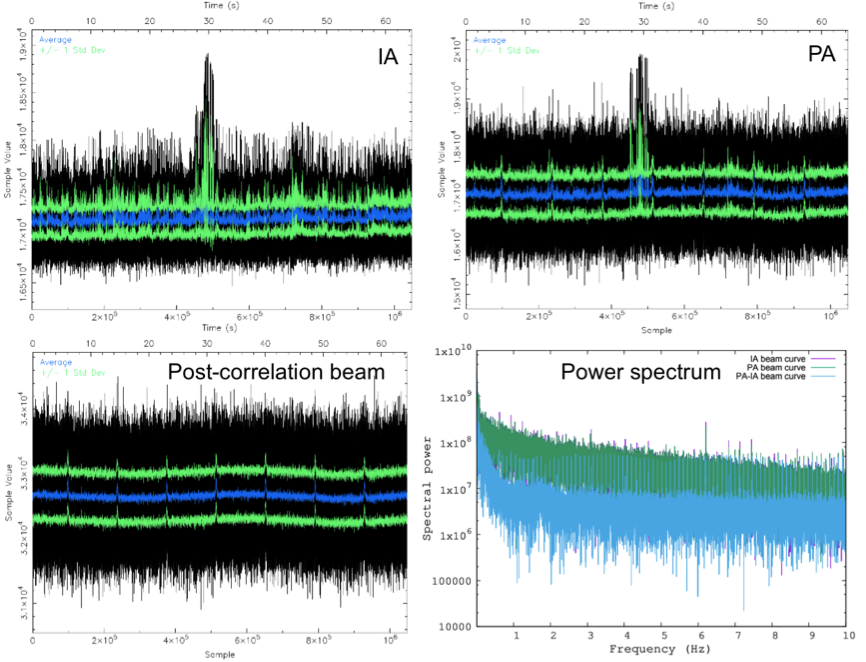
Roy, Chengalur & Pen have demonstrated that a new way of beam-forming called post-correlation beam-forming (i.e. beam-forming which involves only phased sums of the correlation of the voltages of different antennas in an array) significantly improves the capabilities and sensitivity of the upgraded GMRT for discovering new pulsars and fast radio bursts (FRBs). Compared with the traditionally used incoherent (IA) and phased (PA) beam-forming techniques in radio telescopes for time-domain astronomy, this new technique dramatically reduces the effect of red-noise and radio frequency interference, yielding more than factor of 2 improvements in the  GMRT time-domain survey sensitivity. The eye-catching improvements in the signal-to-noise of the pulses from PSR J2144-3933 can be seen in the single-pulse time-series from the post-correlation beam-former. The extremely well-cleaned post-correlation beam also has an order of magnitude reduction in red-noise, as is clear in the power spectra plot. The post-correlation beam formation beautifully brings out the hitherto unexplored capability of interferometric arrays (the future of radio astronomy) over single dish telescopes.  We describe a time-domain survey with the GMRT using this post-correlation beam formation, which will be one of the most sensitive surveys for pulsars and FRBs at low and mid-range radio frequencies.
Curvature in the spectrum of a remnant radio galaxy with the uGMRT
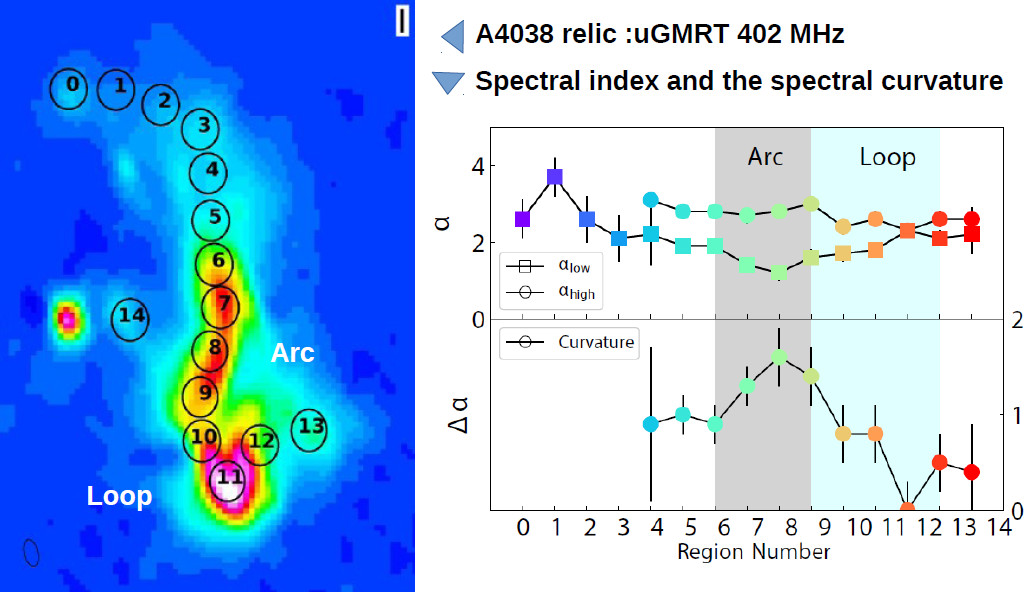
The origin of cosmic rays in the intra-cluster medium (ICM) has been attributed to re-acceleration of charged particles in shocks and turbulence. For these re-acceleration mechanisms to work, it is expected that there will be reservoirs of seed cosmic ray electrons in the ICM. Radio galaxies with jets and lobes are strong candidates for providing these seeds. Dr. Kale and collaborators have used the unique broad band observing capabilities of the recently operational upgraded Giant Metrewave Radio Telescope (uGMRT) to study an enigmatic \"dead radio galaxy\" or a \"remnant radio relic\" in the galaxy cluster Abell 4038. They have shown that the spectrum of the source varies considerably across its extent and undergoes extreme changes from high to low frequencies that are quantified in a parameter called the \"spectral curvature\". The authors fine that the assumption that the spectra of seed particles are simple power-laws may not be correct, given the extreme spectral curvature measured using the uGMRT images. Their study has recently been accepted for publication in the Monthly Notices of the Royal Astronomical Society.
Massive Absorption-selected Galaxies at Intermediate Redshifts
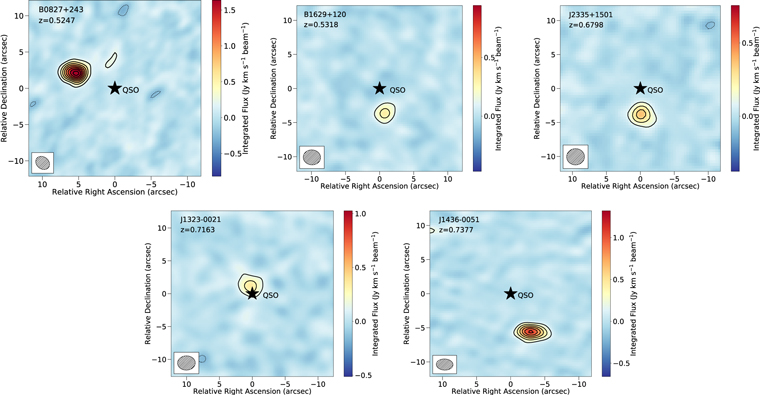
The nature of absorption-selected galaxies and their connection to the general galaxy population have been open issues for more than three decades, with little information available on their gas properties. Kanekar et al. used detections of carbon monoxide (CO) emission with the Atacama Large Millimeter/submillimeter Array to show that five of seven high-metallicity, absorption-selected galaxies at intermediate redshifts, z ~ 0.5–0.8, have extremely large molecular gas masses and high molecular gas fractions relative to stars. Their modest star formation rates then imply long gas depletion timescales, an order of magnitude larger than typical in star-forming galaxies. High-metallicity absorption-selected galaxies at z ~ 0.5–0.8 thus appear distinct from populations of star-forming galaxies at both z ~ 1.3–2.5, during the peak of star formation activity in the Universe, and low redshifts, z < 0.05. Their relatively low SFRs, despite the large molecular gas reservoirs, may indicate a transition in the nature of star formation at intermediate redshifts, z ~ 0.7. The figure shows the five CO detections (in contours), with the position of the background quasar indicated by a star in each panel.