
Science Highlights
Globular Clusters GMRT Pulsar Search (GCGPS). I. Survey Description, Discovery and Timing of the First Pulsar in NGC6093
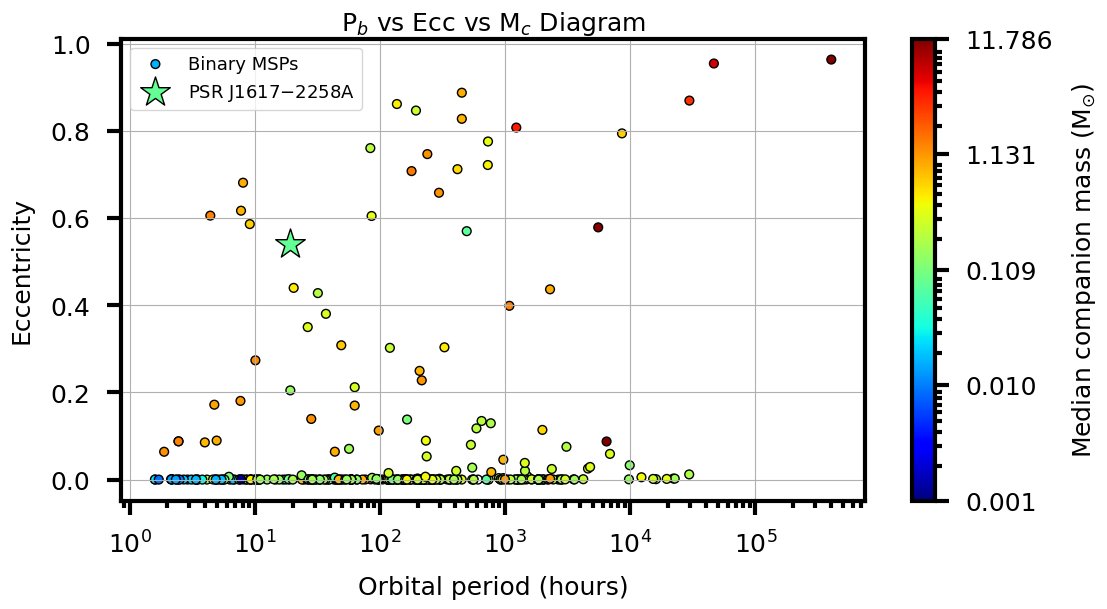
Globular clusters are among the oldest and most compact stellar systems in the Galaxy, where the high stellar densities facilitate frequent dynamical encounters, often leading to the formation of exotic compact binary systems. These systems are predominantly situated at higher Galactic latitudes. Using the Globular Clusters GMRT Pulsar Search (GCGPS), a new low-frequency survey with the upgraded Giant Metrewave Radio Telescope (uGMRT), Das et al. (2025) reported the discovery of the first pulsar in NGC 6093. The source, designated PSR J1617−2258A, is a rapidly spinning millisecond pulsar with a rotation period of just 4.32 milliseconds. It resides in an unusually eccentric (e ~ 0.54) binary system with an orbital period of ~ 19 hours and a low-mass (Mc ~ 0.082 ± 0.06 M⊙) companion, most likely a helium white dwarf. The figure illustrates that this system occupies a distinct region of parameter space, characterised by its unusually low companion mass and high orbital eccentricity relative to all other known pulsar binaries. Only four such systems have greater orbital compactness and higher eccentricity, but all of them have a median companion mass lower than that of PSR J1617−2258A. Such high orbital eccentricity strongly suggests a dynamical formation history – either through the replacement of the pulsar’s original companion during a stellar exchange encounter in the dense cluster core, or via perturbations to its orbit caused by a close flyby of another massive star or compact object. A precise timing solution was achieved after over a year of follow-up observations, which enabled the detection of the relativistic advance of periastron, an orbital precession arising from general relativistic effects. This measurement yields a total system mass of 1.67 +/- 0.06 solar masses, providing important constraints on both the nature of the companion and the pulsar’s mass. The discovery was enabled by the dual-beam phased-array mode of the uGMRT in Band 4 (550–750 MHz), which offers simultaneous, high-sensitivity coverage of both the entire globular cluster and its dense core. When combined with rapid positional refinement via interferometric imaging, this capability underscores the efficacy of the GCGPS in detecting and accurately characterising new pulsars within globular clusters.
Low-frequency, wideband study of an active repeater, FRB 20240114A, with the GMRT
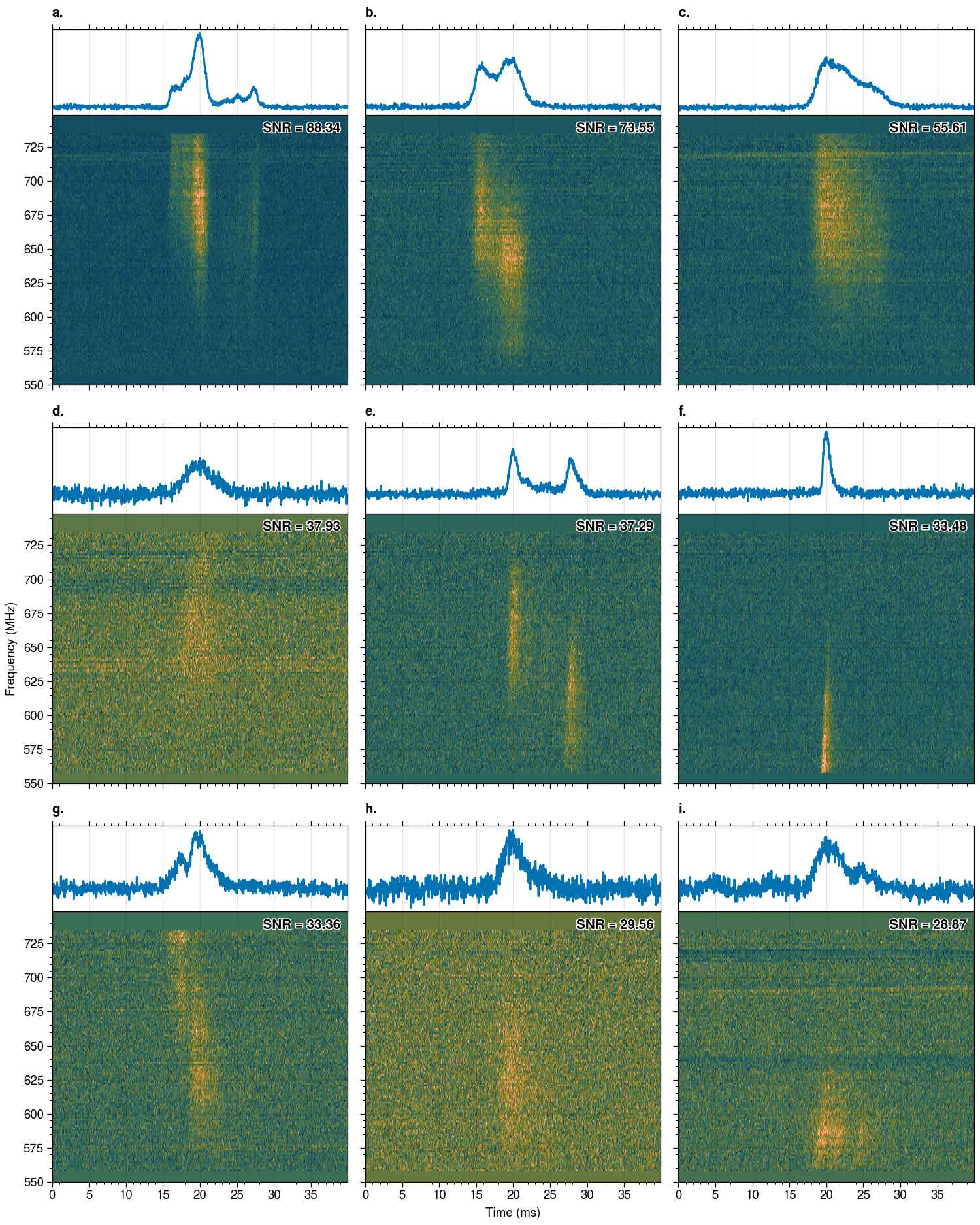
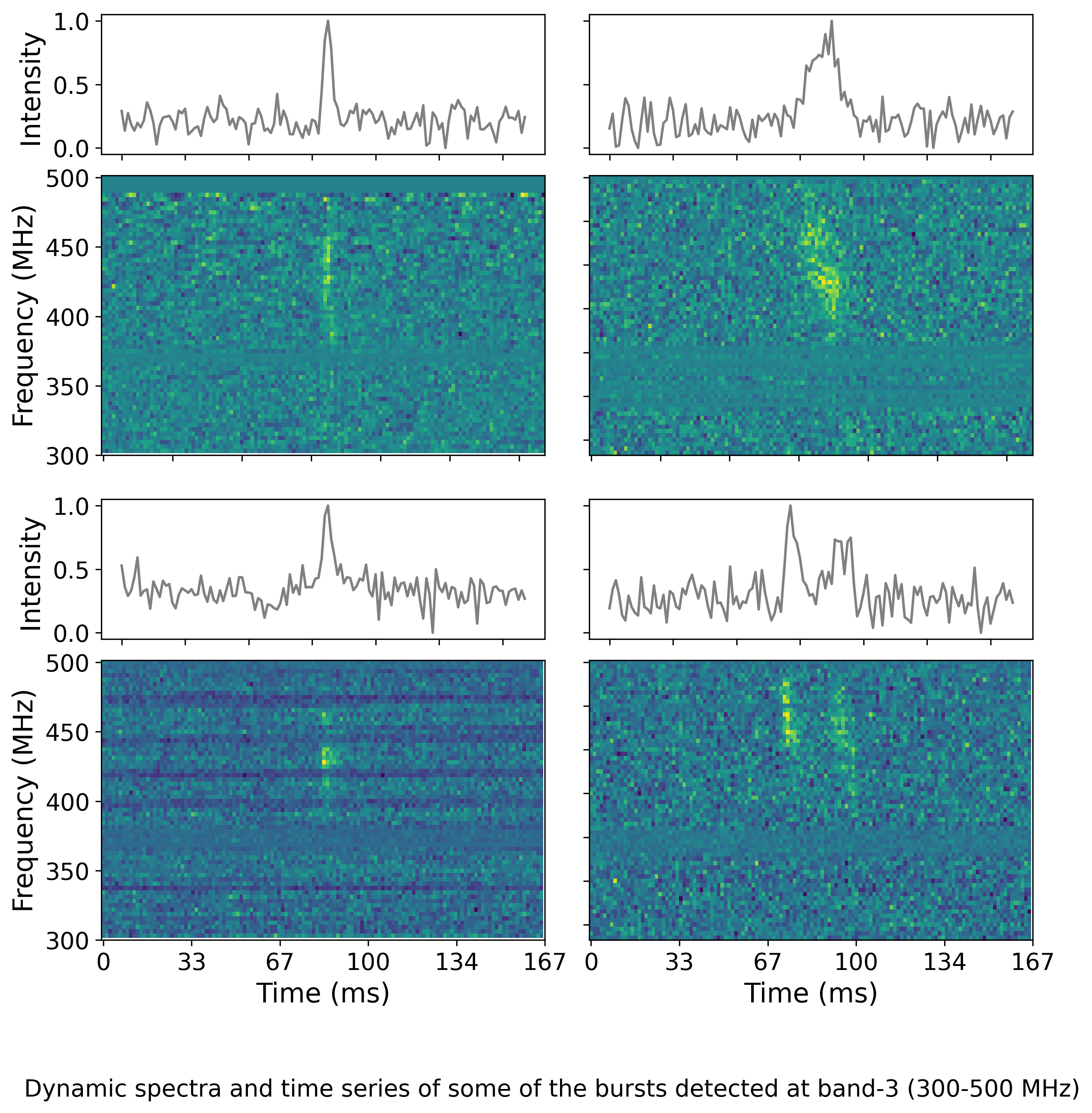
Fast radio bursts are transient sources in the radio sky. Their emission is known to be wideband, coherent, and bright over very short timescales (from hundreds of microseconds to a few milliseconds). While most of these are one-off events, a small fraction emit repeatedly. An even smaller fraction of FRBs emit at rates of over 1 burst per hour, and are thus known as hyperactive repeaters. Panda et al. 2025, presented the study of the most prolific hyperactive FRB to date, FRB 20240114A, with the upgraded GMRT. The authors reported the detection of 167 bursts over a six-month period (i.e. 25/02/2024 to 13/07/2024), spanning a frequency range of 300 to 750 MHz. This dataset enabled an analysis of the distributions of various burst parameters and allowed the authors to examine their evolution over both time and frequency. The dedispersed dynamic spectra for the nine brightest bursts are presented in the figure, revealing a range of burst morphologies, including band-limited emission, multiple components, and sub-burst frequency drifts. The properties of the detected bursts vary widely, with a wide range of intrinsic widths (0.246 - 39.364 ms), scattering timescales (0.004 - 28.289 ms), and dispersion measures (524.07–533.56 pc per cc). The majority of the bursts were band-limited as well, with 56% of the bursts with a band occupancy of 50% or less. Band occupancies varied widely, from 9 (4.5%) to 180 MHz (about 90%). Their bi-modal waiting time distribution indicates that the emission from the FRB is non-Poissonian. Panda et al. 2025 lso reported that the isotropic energy distribution flattens at higher energies for the detected bursts, along with a gradual decline in their flux over time. These results could provide important constraints on the emission mechanism of this FRB.
An activity transition in FRB 20201124A: Methodological rigor, detection of frequency-dependent cessation, and a geometric magnetar model
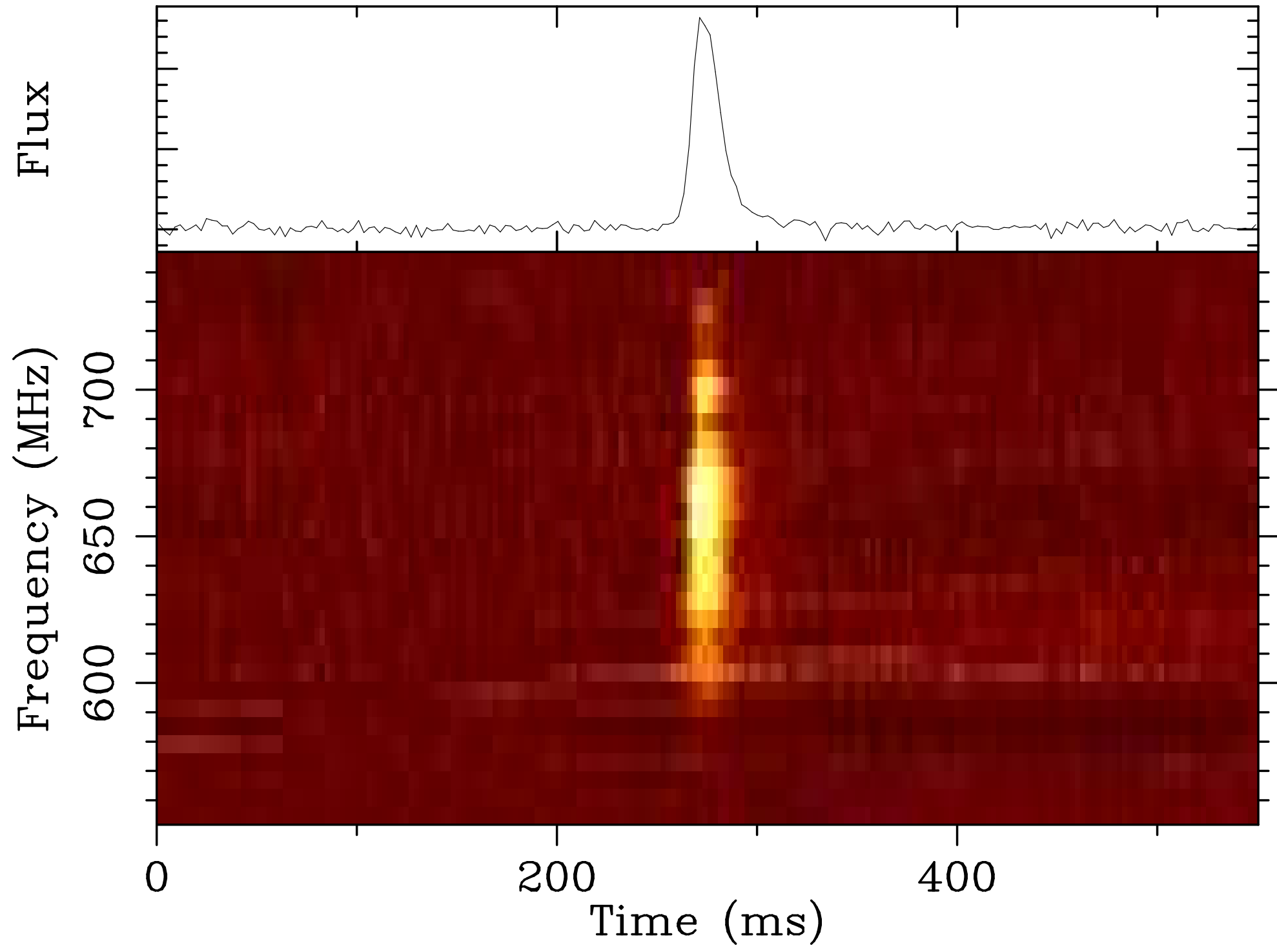
The repeat nature of some of the fast radio bursts (FRBs) enables a multitude of studies using sensitive telescopes to probe their origins and emission mechanisms. Bilous et al. utilized coordinated observations using GMRT and WSRT to study the repeating FRB 20201124A. Using primarily the GMRT observations and earlier published contemporary FAST observations, we showed that FRB 20201124A exhibits a frequency-dependent activity window. Before this FRB, only FRB 20180916B was known to show such frequency dependence. Using our data as well as other published results on this particular source, it was conjectured that the source of FRB 20201124A is an ultra-long period magnetar and the bursts might have been caused by crustal motion events. It was also shown that the excess dispersion measure (DM) reported for the bursts from this source might have been biased by the sad trombone effect and such biases are hard to avoid unless the signal-to-noise ratio is extremely high. The brightest burst detected with GMRT is shown in the accompanying figure.
First Robust Detection of Linear Polarization from Metric Solar Emissions: Challenging Established Paradigms
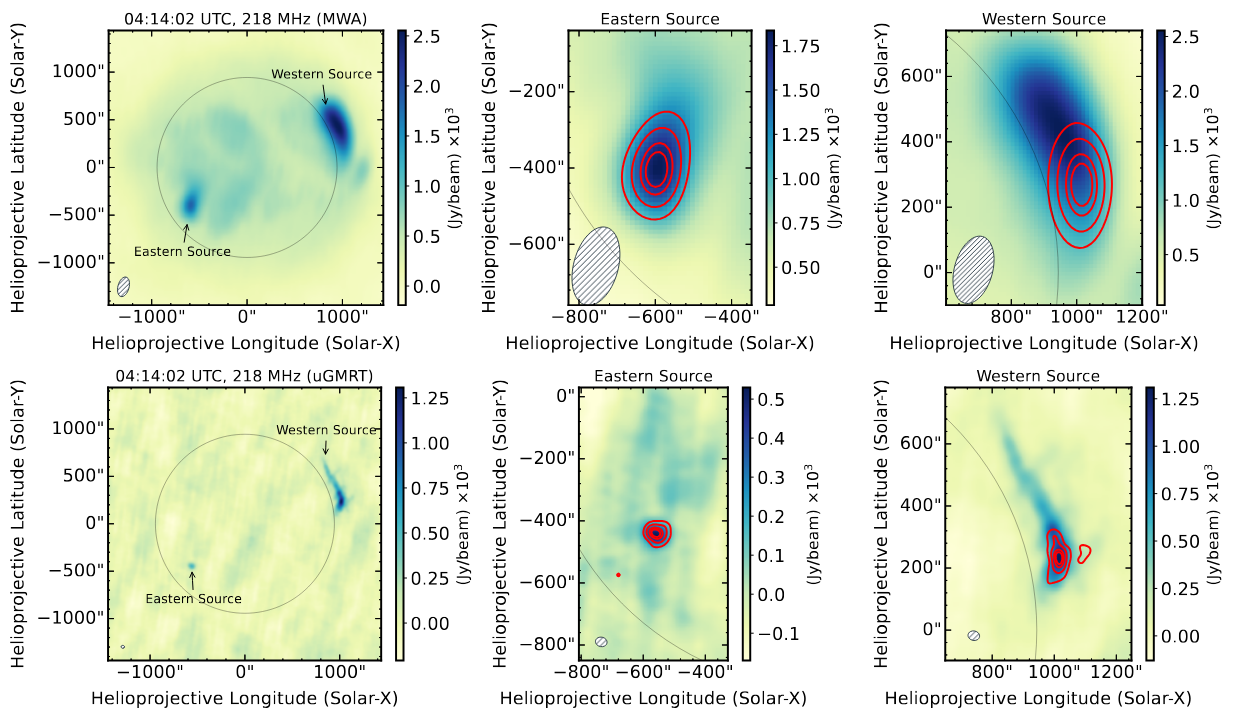
Solar polarimetric studies at meter wavelengths have long assumed that any observed linear polarization must be of instrumental origin. This assumption stems from theoretical expectations that strong Faraday rotation in the solar corona would erase any intrinsic linear polarization. Dey et al. report the first robust detection of linear polarization in solar emissions at meter wavelengths, based on simultaneous observations at overlapping frequencies, using two instruments with fundamentally different designs and geographically widely separated: the Murchison Widefield Array (MWA) and the upgraded Giant Metrewave Radio Telescope (uGMRT). The observations, carried out on 25 June 2022 in the 217–247 MHz band, captured linearly polarized emissions from both type I noise storms and a type III burst. Independent calibration and analysis procedures for the two instruments yielded consistent linear polarization fractions, ruling out a common instrumental origin. The adjacent figure shows the contours of linearly polarized emission (in red) overlaid on total intensity (Stokes I) maps for two solar noise storms observed with the MWA (upper panels) and the uGMRT (lower panels). The eastern source, weaker in Stokes I, has a linear polarization fraction of 13.5% ± 0.5% measured using the MWA and 12.3% ± 2.0% using uGMRT. The brighter western source exhibits a lower linear polarization, 6.0% ± 0.3% measured with MWA and 5.9% ± 0.5% with the uGMRT. Dey et al. also showed rapid, source-specific variations in the observed linear polarization on short time and frequency scales, as well as changes in the morphology of the linearly polarized source, further confirming their solar origin. The unexpected presence of linear polarization implies that the calibration schemes that rely on the assumption of zero linear polarization — a common practice in low-frequency solar polarimetric studies — can potentially bias circular polarization estimates as well, leading to incorrect physical inferences. This result challenges a decades-old paradigm in solar radio physics and opens the possibility of using full-Stokes, low-frequency spectropolarimetric imaging to probe coronal magnetic fields and plasma structures. The discovery also has implications for interpreting coherent radio bursts from other stellar systems, where linear polarization is often used to infer emission mechanisms, guided by the knowledge from solar radio physics.
Varying Activity and the Burst Properties of FRB 20240114A Probed with GMRT Down to 300 MHz
The origin of Fast Radio Bursts (FRBs) remains a major open question in astrophysics. Some FRBs are known to repeat, enabling targeted follow-up with sensitive facilities such as the uGMRT. Repeating FRBs, with their narrowband emission, downward frequency drifts, and variable burst rates, offer a unique opportunity to probe intrinsic emission processes and propagation effects. We present uGMRT observations of the active repeater FRB 20240114A in the 300 to 750 MHz frequency range, detecting 60 bursts, including events as faint as 0.1 Jy ms. Burst rates reached up to 31 per hour, measured within 10 minutes of FAST detections exceeding 500 per hour. The burst fluence distribution follows a power law with index -1.24 +/- 0.11. Most bursts are narrowband (about 10% fractional bandwidth) and many show clear downward drifts (-0.35 to -11.7 MHz per millisecond), extending the low-frequency regime of the drift-frequency relation and supporting curvature radiation in magnetized environments. Multi-telescope reports (ATels) suggest frequency-dependent activity, with low-frequency detections clustering earlier than >2 GHz events, contrary to chromatic activity in FRB 20180916B. Interferometric imaging places 3-sigma limits of <= 600 uJy at 400 MHz and <= 89 uJy at 650 MHz on any persistent radio source, far below those of FRB 20121102A and FRB 20190520B. The source remained active till our final session, highlighting the importance of ongoing multi-wavelength monitoring to uncover the origins of FRB 20240114A and repeating FRBs in general.
A Direct Measurement of the Electron Density Turbulence Parameter C_1 and Implications for the Emission Size of Magnetar XTE J1810-197
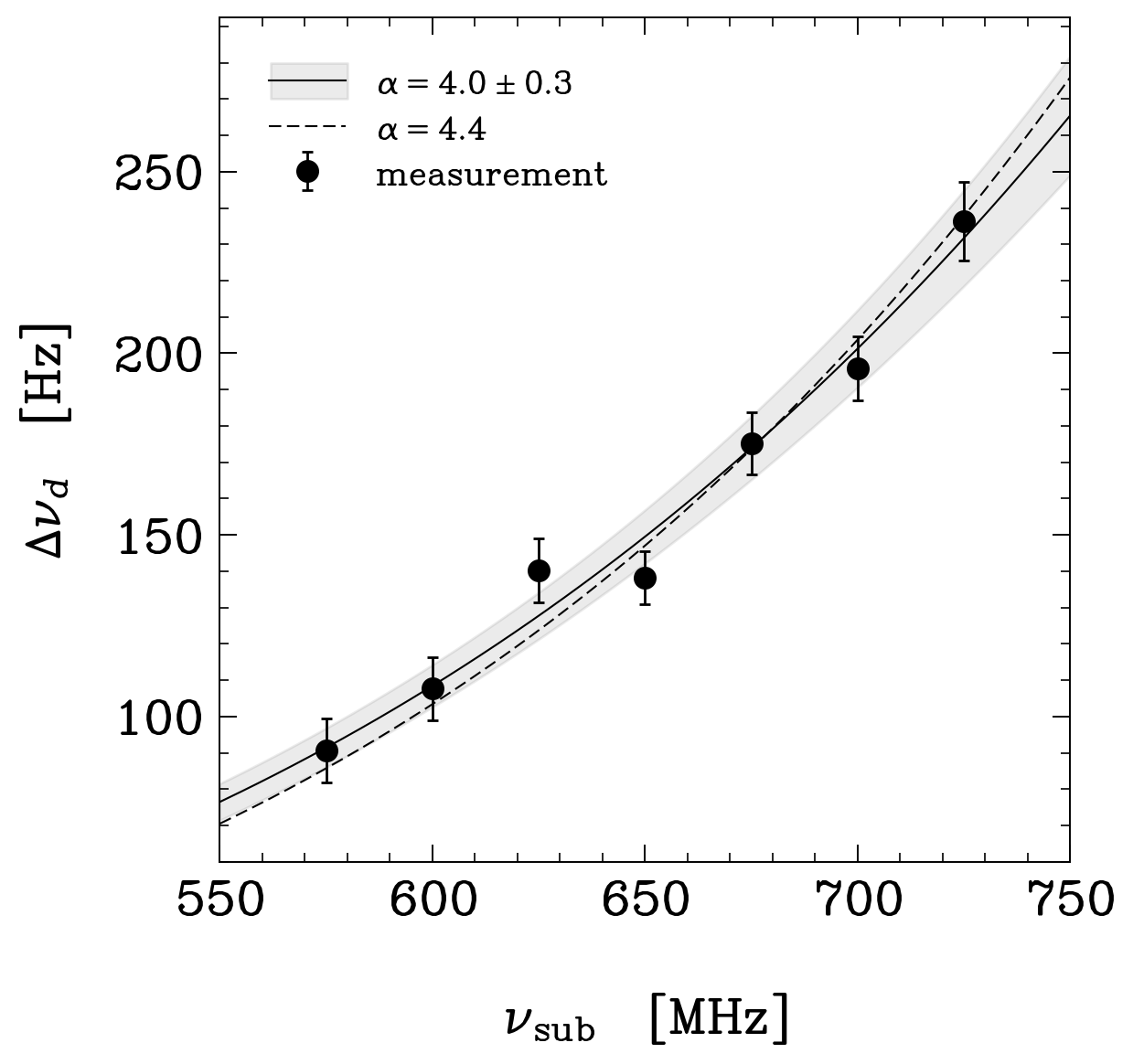
Although all pulsars scintillate at radio frequencies, scintillation is challenging to measure at higher dispersion measures (DM). The enhanced scattering results in interference of off-axis electric field from large delays, resulting in scintillation with fine structure. Typically, either the scattering or scintillation is measurable due to the inverse relation between the two. For clearly discernible scintillation, such as e.g. seen in a typical dynamic spectrum of a low-DM pulsar, there is negligible scattering, while at high DM there is appreciable scattering but the scintillation has fine structure. However, given a sufficiently capable observing configuration, both the quantities can be measured: i.e. scintillation through a high spectral resolution autocorrelation, and scattering through a high time resolution pulse fitting. Marthi and Maan (2025) have measured scintillation bandwidths of ~ 100 Hz at 600 MHz for the magnetar XTE J1810-197, while simultaneously measuring a scatter broadening time of ~ 1.2 ms, using Nyquist-sampled Band-4 baseband data. The adjacent figure shows the measured scintillation bandwidths across Band-4, consistent with its expected quartic dependence on frequency. The simultaneous in-situ measurements of scintillation and scattering enable them to directly measure the turbulence parameter C_1, through the uncertainty relation. While the measured C_1 does not strongly constrain the power law index of the electron density wavenumber spectrum, the large scatter-broadening measurement allows constraining the emission size at the magnetar to ~ 100-1000 km.
Magnetic Field in the Lobes of the Seyfert Galaxy NGC 3516: Suggestions of a Helical Field
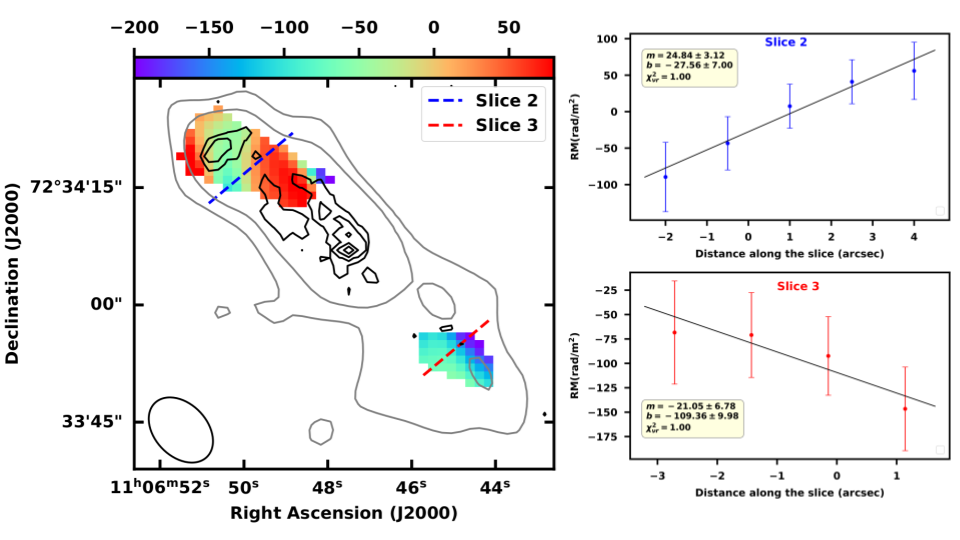
Seyferts are a class of active galactic nuclei (AGNs) found in spiral or lenticular galaxies, characterised by a bright, compact nucleus featuring high-ionisation emission lines in their optical/UV spectra. These AGNs are traditionally thought to lack strong jet outflows and are thus faint in radio synchrotron emission. Ghosh et al. present multi-frequency radio-polarimetric observations of NGC3516, a Seyfert galaxy and changing-look AGN, using the Karl G. Jansky Very Large Array (VLA) at 5.5 and 10 GHz, and the Giant Metrewave Radio Telescope at 663 MHz, and revealing the importance of the magnetic field in shaping even weak radio jets. NGC3516 shows polarised radio continuum emission, indicating the presence of both poloidal and toroidal magnetic fields. For the first time, the authors detected transverse gradients in the rotation measure (RM, the ratio of the difference between the intrinsic and observed polarisation angles to the square of the wavelength) across the kiloparsec-scale lobes in a radio-quiet Seyfert outflow. This indicates an ordered helical magnetic field, sustained out to kiloparsec scales. The RM gradients are oriented in opposite directions in the northern and southern lobes relative to the core, consistent with a helical magnetic field being wound by the same central engine, but viewed on opposite sides. The left panel of the figure shows the RM of NGC3516, along with the transverse slices taken along the northern (blue) and southern (red) lobes; VLA 5.5 GHz (black) and 10 GHz (grey) contours of the source at >3 sigma are overplotted. The right panel shows gradients fitted using the chi-square minimisation technique. Additionally, the authors report the first-ever detection of circular polarisation in both the core and inner jet knot in a Seyfert galaxy, confirming the presence of complex magnetic field configurations in even a radio-quiet system.
An ALMA [CII] 158 micron Survey of Damped Lyman-alpha Absorber Galaxies at z ∼ 4
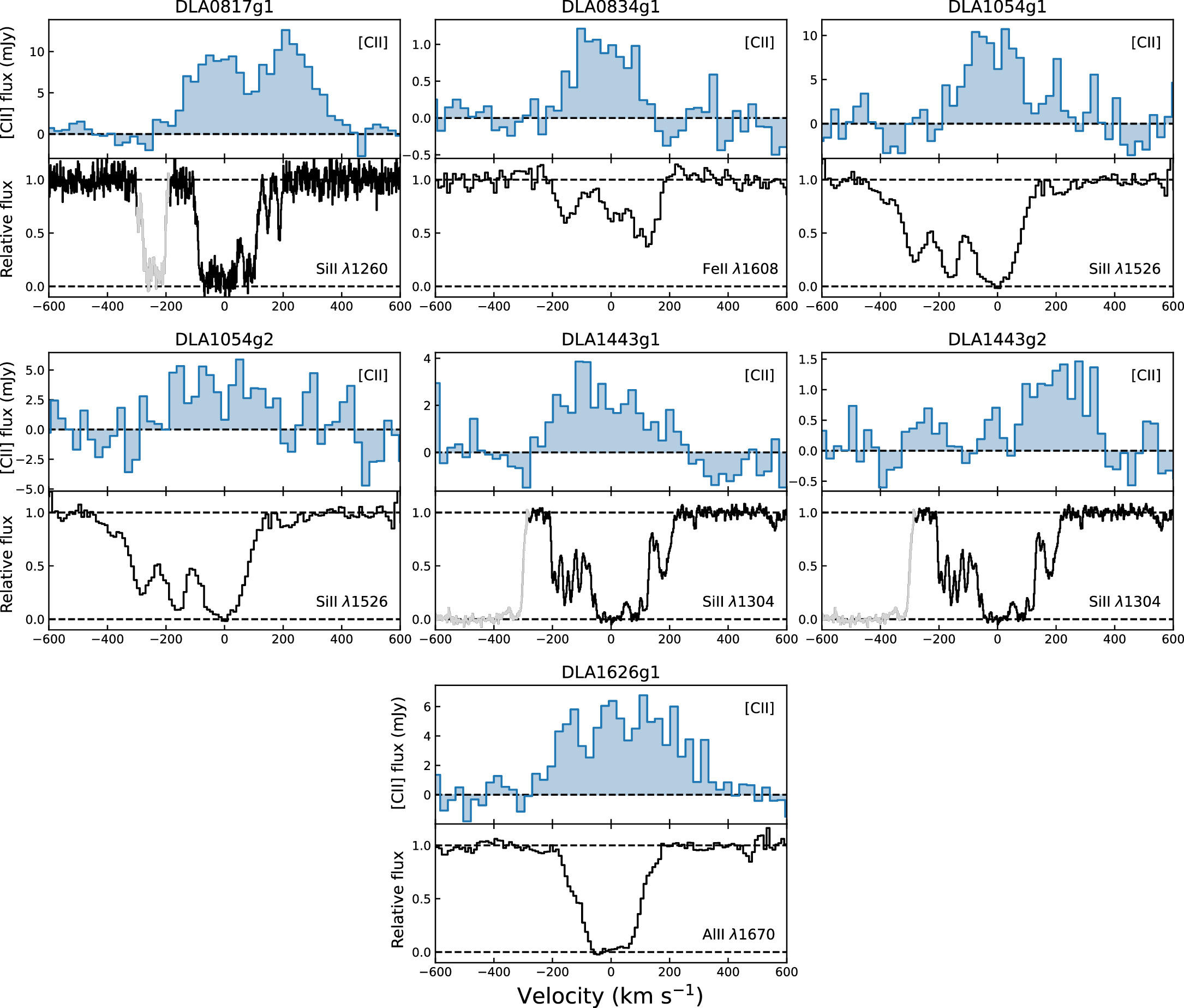
Galaxies selected by their absorption signatures in the spectra of background quasars provide a way of identifying high-redshift galaxy samples unbiased by the galaxy luminosity. However, the nature of such absorption-selected galaxies and their connection to the emission-selected population have long been open questions: the proximity of the bright background quasar has made it difficult to identify and study the foreground faint galaxy. Neeleman et al. present an Atacama Large Millimeter/submillimeter Array (ALMA) survey to study the galaxies associated with a representative sample of 16 damped Lyman-alpha absorbers (DLAs) at z~4.1-4.5, using the [C II] 158-micron ([CII]) line. The authors detect seven [CII]-emitting galaxies in the fields of five DLAs, all of which have absorption metallicity [M/H] > -1.5. They find that the detectability of these HI-absorption-selected galaxies with ALMA is a strong function of DLA metallicity, with a detection rate of ~71% for DLAs with high metallicity, [M/H] > ‑1.5, while no galaxies are identified in the fields of DLAs with [M/H] < ‑1.5. The identified DLA galaxies have far-IR properties similar to those of typical star-forming galaxies at z ∼ 4, with estimated obscured star formation rates ranging from 6 to 110 solar masses per year. High-metallicity DLAs therefore provide an efficient way to identify and study samples of high-redshift, star-forming galaxies, without preselecting the galaxies by their emission properties. The agreement between the velocities of the metal absorption lines of the DLA and the [CII] emission line of the DLA galaxy indicates that the metals within the DLA originated in the galaxy. With observed impact parameters between 14 and 59 kpc, this indicates that star-forming galaxies at z ∼ 4 have a substantial reservoir of dense, cold, neutral gas within their circumgalactic medium that has been enriched with metals from the galaxy. The figure shows a comparison between the ALMA [CII] emission and optical line absorption profiles for the seven galaxies: the absorption and emission velocities are seen to be in remarkable agreement.
A Massive HI-absorption-selected Galaxy at z ~ 2.356
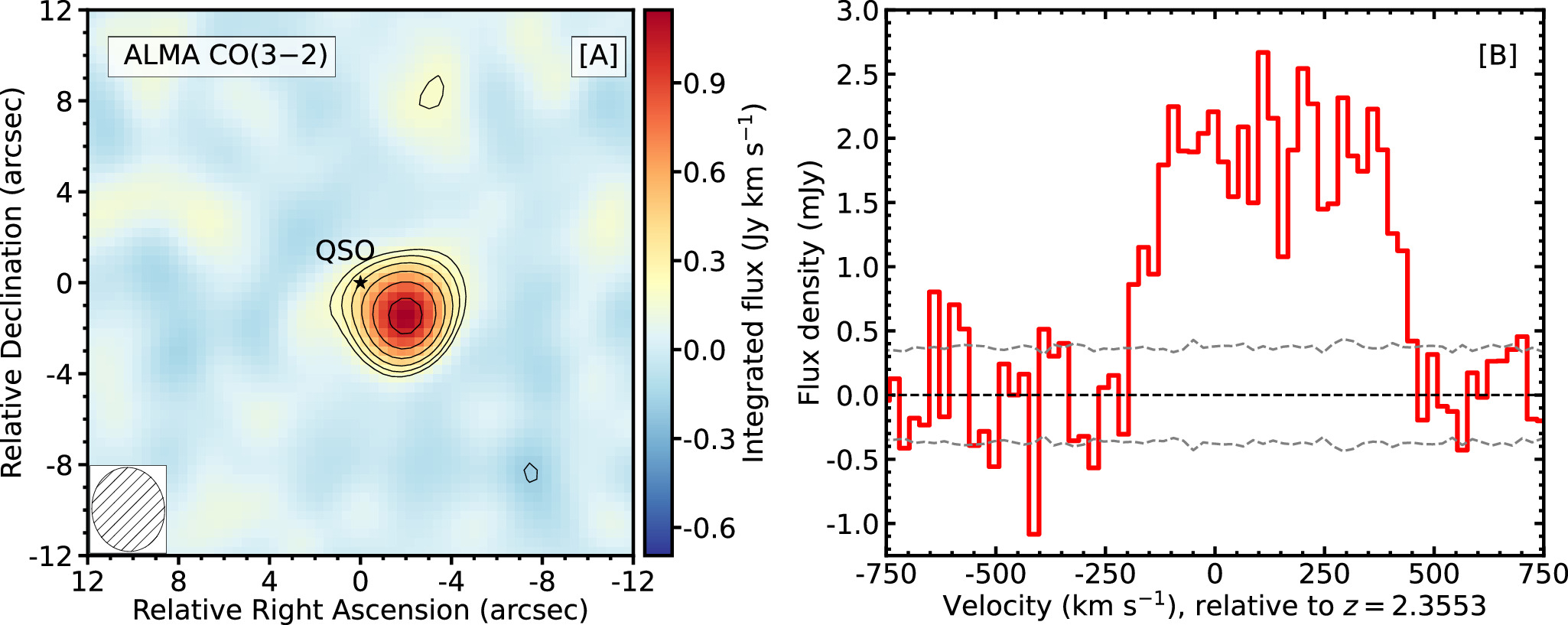
The nature of the absorption-selected galaxies that give rise to high-redshift damped Lyman-alpha absorbers (DLAs) towards background quasars has been an open question in astronomy for nearly four decades, with models for the absorbing galaxies ranging from faint dwarfs to large spiral disk galaxies. Kaur et al. used the Jansky Very Large Array (VLA) and the Atacama Large Millimeter/submillimeter Array (ALMA) to detect CO(1-0), CO(3-2), and rest-frame 349 GHz continuum emission from an absorption-selected galaxy, DLA1020+2733g, at z~2.3568 in the field of the z=2.3553 DLA toward QSO J1020+2733. The VLA CO(1-0) detection yields the highest molecular gas mass ever measured in an absorption-selected galaxy. Kaur et al. obtain a super-solar DLA metallicity from the Zn absorption line detected in a Keck Echellette Spectrograph and Imager spectrum: this continues the trend of high-metallicity DLAs being frequently associated with massive galaxies. The authors obtain a star formation rate (SFR) of <~ 400 solar masses per year from the rest-frame 349 GHz continuum emission and a relatively long molecular gas depletion timescale of >~ 0.6 Gyr. The combination of ALMA and VLA data show that the excitation of the J=3 CO rotational level is subthermal, suggesting that DLA1020+2733g has a low SFR surface density. The large velocity spread of the CO lines, ~500 km/s, and the long molecular gas depletion timescale indicate that DLA1020+2733g is likely to be a massive cold rotating-disk galaxy. The figure shows (left panel) the ALMA CO(3-2) image of DLA1020+2733g and (right panel) the ALMA CO(3-2) spectrum of the galaxy.
A New Polarization Calibration Framework for Low-Frequency Radio Interferometers Using the Unpolarized Sky
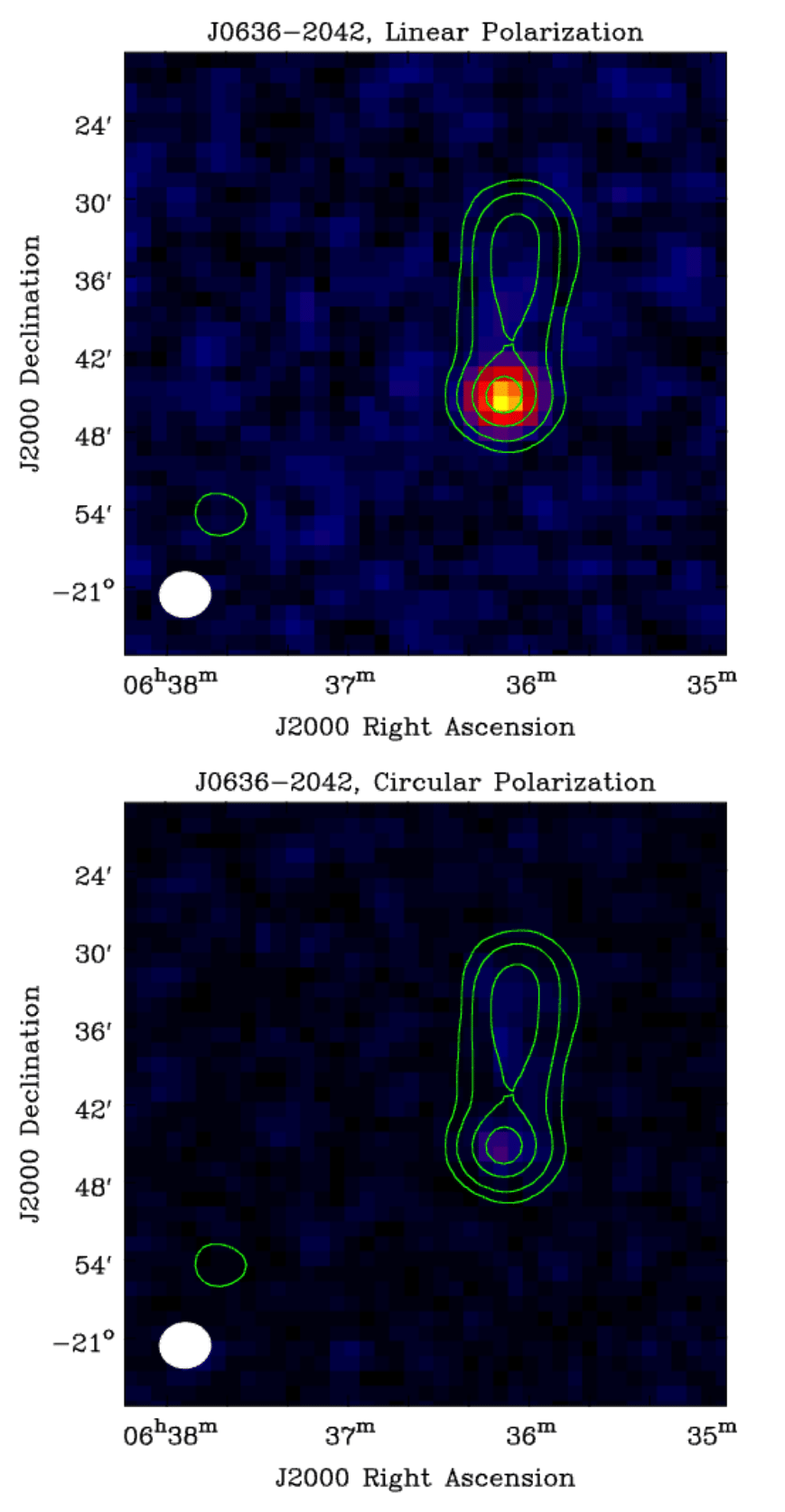
Accurate calibration of polarized radio emission is crucial for investigating magnetic fields in the universe, but remains particularly difficult at meter wavelengths due to the lack of bright polarized calibrators. With the Square Kilometre Array (SKA) set to start operations later this decade, resulting in a leap in sensitivity, there is a pressing need for a robust polarization calibration framework tailored to low-frequency observations. This is essential not only for the SKA-Low but also for its precursors and pathfinders such as the Murchison Widefield Array (MWA), LOFAR, and the upgraded Giant Metrewave Radio Telescope (uGMRT). Kansabanik et al. present a novel polarization calibration method that utilizes the apparent polarization imprinted on the unpolarized sky by the telescope’s polarized primary beam. This approach eliminates the dependence on intrinsically polarized sources. The method was validated using MWA observations of the active galactic nucleus J0636–2042, which exhibits strong linear polarization in the southern hotspot region and negligible circular polarization. The overlaid contours of total intensity on top of the linearly and circularly polarized emission, shown in the top and bottom panels of the adjacent figure, confirm the expected emission characteristics. This technique allows calibration of both direction-independent and direction-dependent instrumental polarization effects and, importantly, is immune to ionospheric Faraday rotation — one of the key challenges for polarimetric calibration at low frequencies. The method enables instrumental leakage removal down to 1% accuracy for the MWA, without relying on the availability of bright polarized sources. Tests on faint polarized sources further confirm the precision and reliability of this approach. Applicable to a broad range of low-frequency interferometers --- including LOFAR, uGMRT, NenuFAR, OVRO-LWA, and SKA-Low --- this framework marks a significant advance in radio polarimetry, paving the way for high-fidelity polarimetric studies across astrophysical and heliospheric environments.