

Research at NCRA-TIFR
The National Centre for Radio Astrophysics of the Tata Institute of Fundamental Research (NCRA-TIFR) is the premier institute for radio astronomy in India, and one of the best in this field in the world. Research activities at NCRA-TIFR are centered on low frequency radio astronomy, with faculty members carrying out research in a wide range of areas, including solar physics, pulsars, active galactic nuclei, the interstellar medium, supernova remnants, the Galactic Centre, nearby galaxies, high-redshift galaxies, fundamental constant evolution, and the epoch of reionization. NCRA-TIFR has built and operates the largest steerable radio telescope in the world, the Giant Metrewave Radio Telescope, as well as the Ooty Radio Telescope, and offers challenging opportunities to work at the frontiers of astronomy and astrophysics, as well as in instrumentation development. A detailed description of the areas in which research is underway at NCRA-TIFR can be obtained by clicking on the links below.
Research Areas:
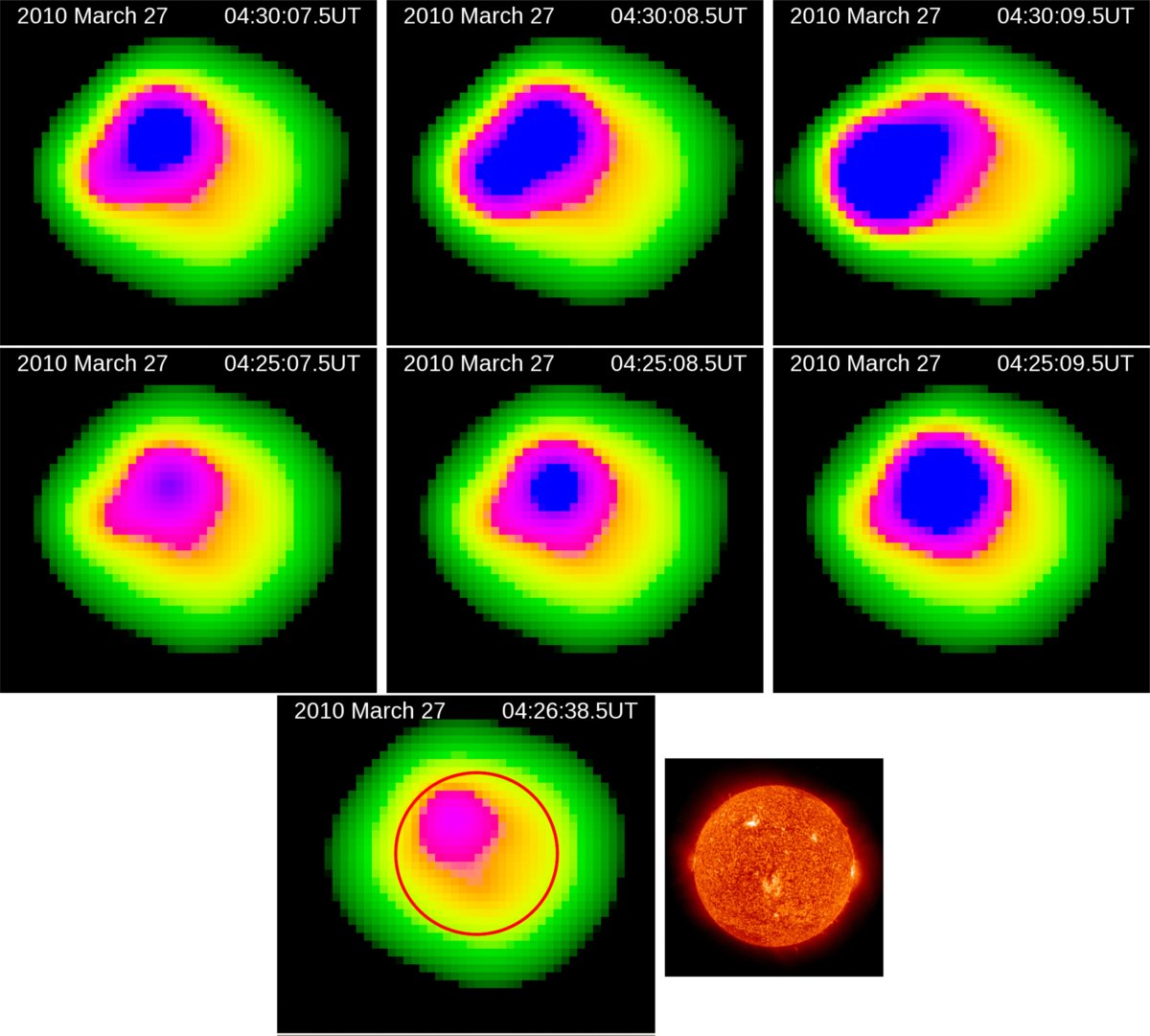
The Sun and the Heliosphere
Radio waves provide a view of the Sun that is very different from that at other wavelengths.
Read more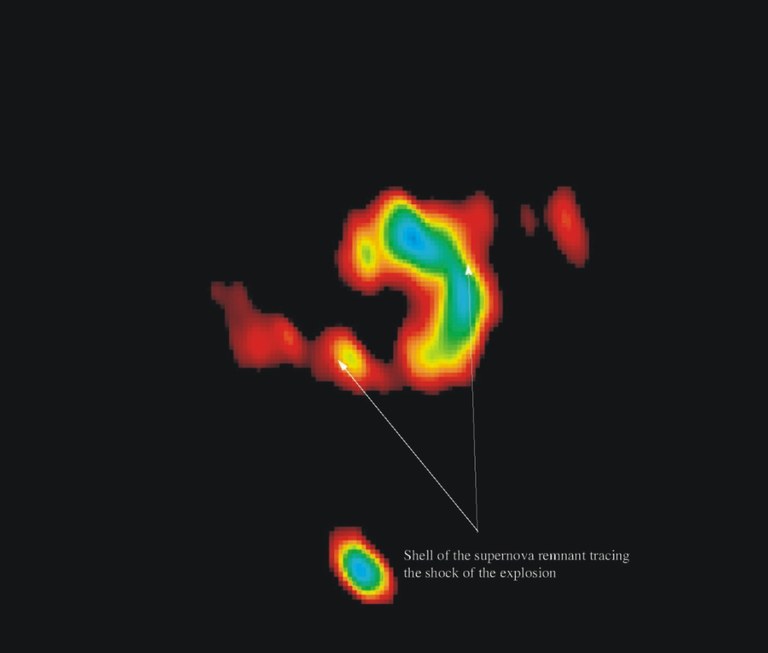
The Milky Way
Understanding the physical conditions in the Milky Way, that stem from the interactions between the stars and the gas is an important area of research in astronomy and at NCRA-TIFR.
Read More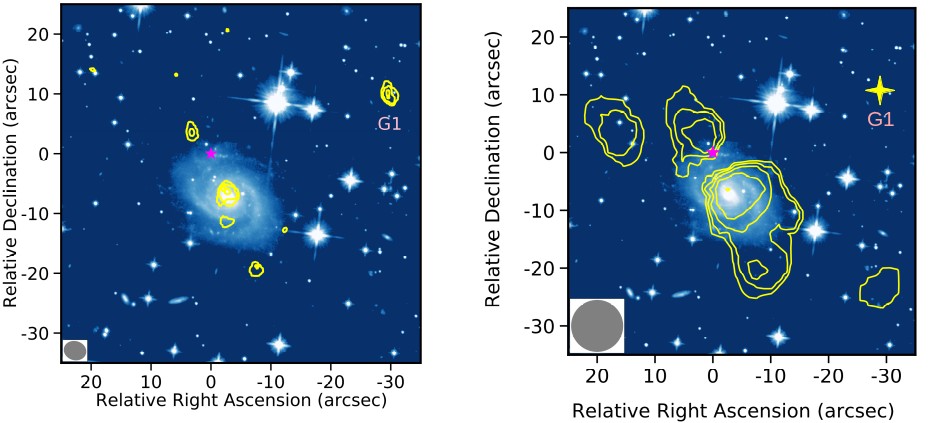
Pulsars and Transients
Pulsars are rapidly rotating neutron stars that emit beams of radio radiation from their magnetic poles, at low frequencies, ideally suited for the ORT and the GMRT.
Read More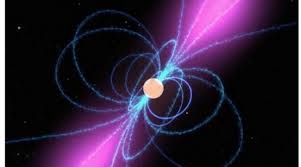
Pulsar Surveys
Pulsars have tremendous untapped potential to probe the behaviour of matter, energy, space and time under extraordinarily diverse conditions.
Read More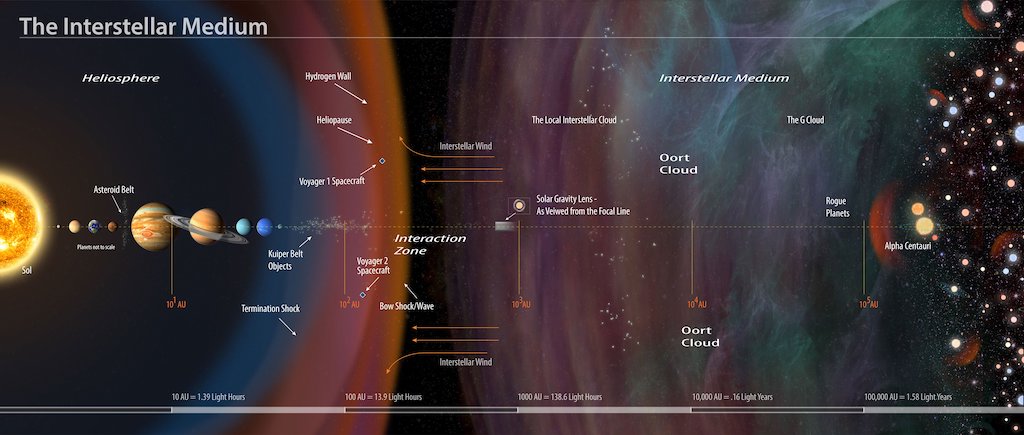
The Interstellar Medium
The life cycle of a galaxy consists of an interplay between its two main constituents, the stars and the interstellar medium (ISM), with the dark matter halo providing the background stage.
Read More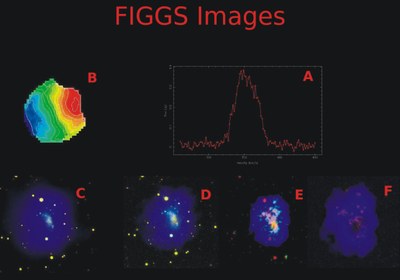
Nearby Galaxies
“Normal” galaxies are quiescent systems that do not produce extremely energetic emission. In fact, the Milky Way is a good example of a normal galaxy!
Read More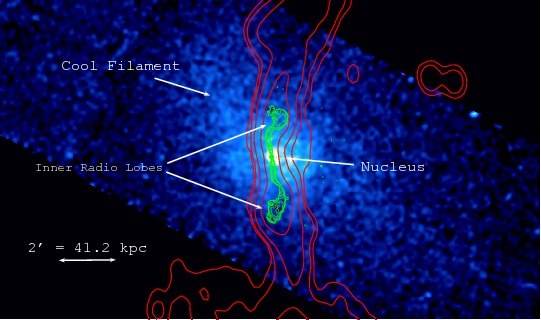
Active Galaxies and Clusters
Active Galactic Nuclei (AGNs) are galaxies where extremely energetic phenomena take place, driven by activity around the super-massive black holes at their centres.
Read More
High-redshift
Understanding the nature of high-redshift galaxies, as well as galaxy evolution, is an important research area at NCRA-TIFR. Astronomers here use diverse methods, in both emission and absorption, and over a wide range of observing frequencies, to probe physical conditions in high-redshift galaxies.
Read More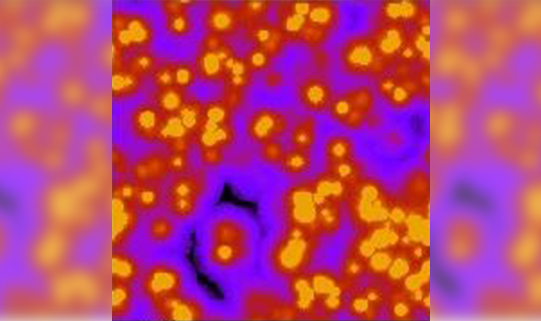
Cosmology and the Epoch of Reionization
The Epoch of Reionization (EoR) is the last phase transition in the Universe, during which the inter-galactic medium moves from being predominantly neutral to being predominantly ionized.
Read More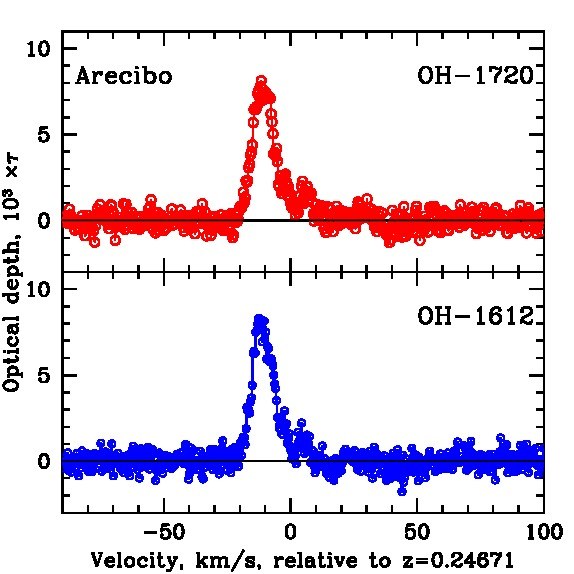
Fundamental Constant Evolution
Coupling constants like the fine structure constant (alpha), the ratios of particle masses and other dimensionless quantities, are not expected to change with space or time in the standard model of particle physics or General relativity.
Read More
Extragalactic Deep Fields
An important area of astronomical research in recent years has been the use of deep multi-wavelength studies of specific extragalactic fields to study in detail how galaxies and their stars and gas evolve through the age of the Universe.
Read More
Radio Continuum Surveys
Systematic surveys that map large areas of the sky with high sensitivity in a uniform manner are a major program at most observatories.
Read More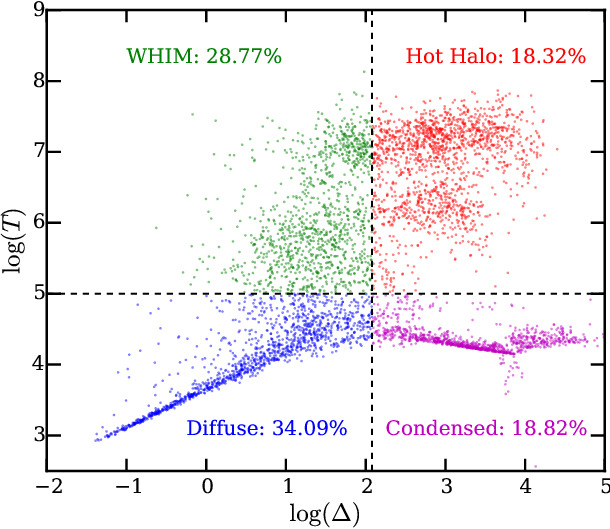
The Intergalactic Medium
The intergalactic medium (IGM) is the low-density diffuse gas spread in between galaxies. In fact, most of the matter (both ordinary baryons and dark matter) in the universe lies in the IGM.
Read More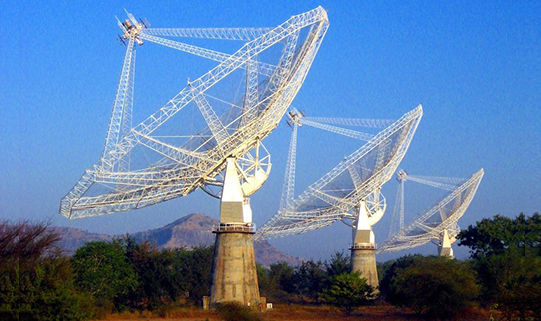
The Giant Metrewave Radio Telescope
With thirty antennas, each of diameter 45 metres, spread out over a maximum distance of 25 km, the GMRT is the biggest and most sensitive radio interferometer in the world at low frequencies, < 1 GHz.
Read More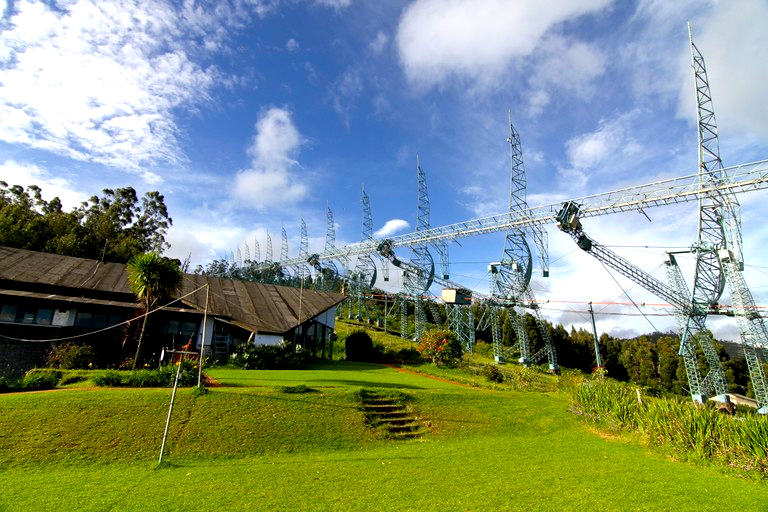
The Ooty Radio Telescope
Over the last decade, the ORT has been mainly used for studies of Inter-Planetary Scintillation, providing an important probe of solar activity and space weather studies.
Read More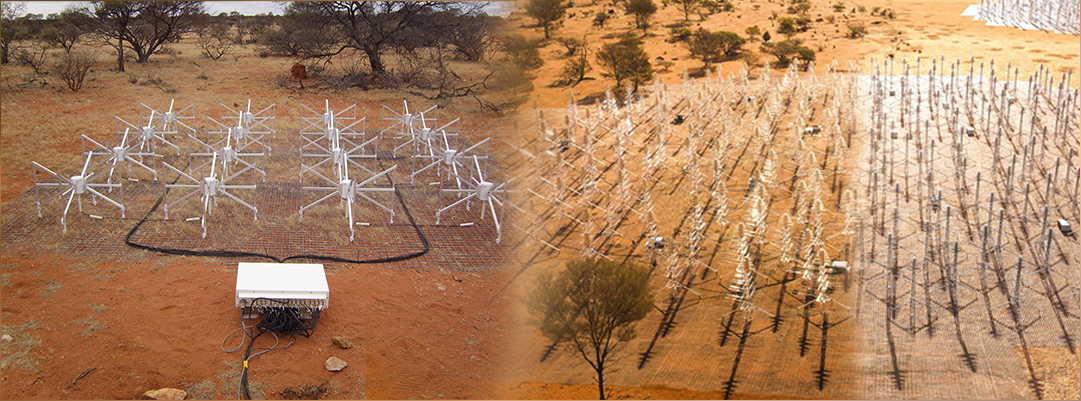
The Square Kilometre Array
The Square Kilometre Array (SKA), the next generation radio telescope, is now entering the design stage for SKA phase-I, that has started in November 2013 and will run for three years, after which SKA-I construction will start towards the end of 2017.
Read More
Astronomical instrumentation
The success of a radio observatory rests heavily on its ability to work at the frontiers of technology to develop cutting-edge software and hardware instrumentation to detect and process weak radio astronomical signals.
Read More