
Science Highlights
GMRT polarisation and brightness temperature observations of Venus
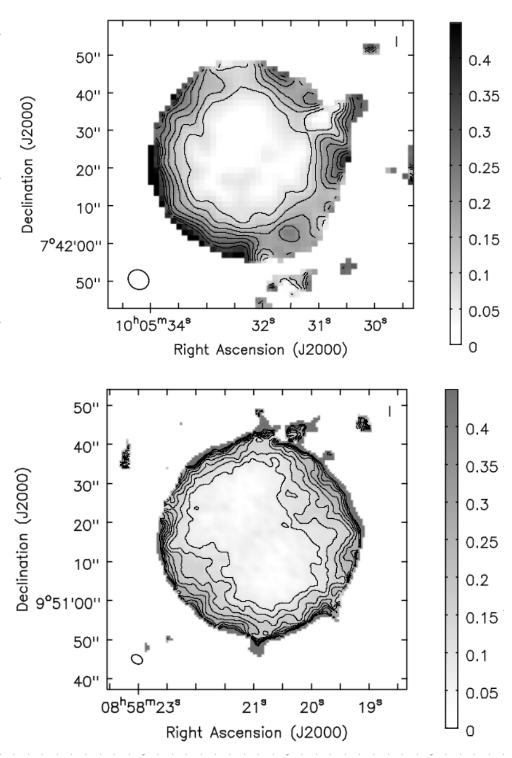
Mohan et al. present results from carefully designed Giant Metrewave Radio Telescope (GMRT) low-frequency observations of Venus during its inferior conjunction. This ensured that the apparent angular size and flux density of Venus would be the largest observable from the Earth, making these the most detailed and sensitive observations of Venus that are possible with the GMRT. Mohan et al. used this opportunity to observe Venus at 234 MHz, 608 MHz and 1298 MHz. The figure shows the degree of polarisation maps for Venus at 607.67 MHz (top panel) and 1297.67 MHz (bottom panel), with the contour levels at 8, 12, 16, 20, 24, 28, 32, 36 and 40 percent; these are the lowest frequencies at which polarimetric maps have been made of Venus. Such polarimetric observations are essential for determining the sub-surface dielectric constant. As the penetration depth is substantially larger at low frequencies, metrewave observations allow us to probe the deeper sub-surface layers of Venus. This, in turn, is a very useful input for modeling the planetary surface dielectric properties. Using these observations, Mohan et al. determined the sub-surface dielectric constant to be ~4.5. At 234 MHz, they placed an upper limit of 321 K on the brightness temperature of Venus, firmly establishing that the brightness temperature of Venus begins to falls by about 1.4 GHz; the 234 MHz upper limit implies that the rate at which the temperature falls is even steeper than estimated earlier. This drop in the observed brightness temperature continues to pose a puzzle for present-day thermal emission models, which predict the brightness temperature to remain constant at low frequencies. However, the existing models do not take sub-surface properties into account, while emission at lower frequencies arises from deeper subsurface layers. These results suggest that sub-surface properties (dielectric properties through density and mineral content) can significantly impact the observed brightness temperature at low radio frequencies.
A radio halo surrounding the Brightest Cluster Galaxy in RXCJ0232.2-4420: a mini-halo in transition?
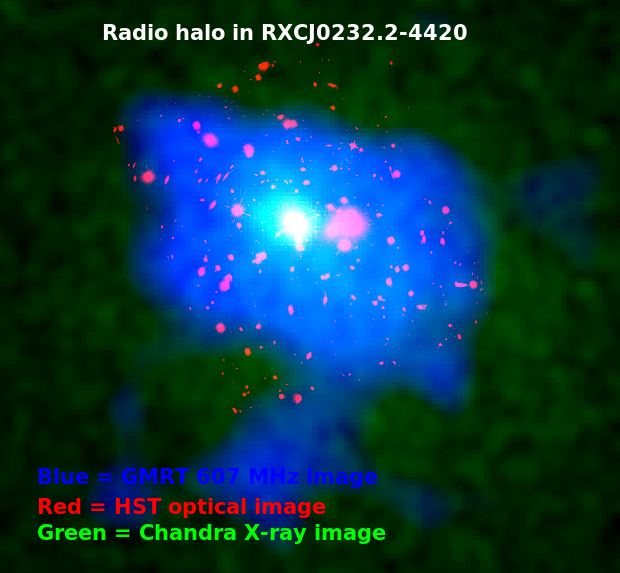
Kale et al. report the discovery of a "recentResults"radio halo , a diffuse radio source, in the galaxy cluster RXCJ0232.2-4420 (SPT-CL J0232-4421, z = 0.2836) using observations with the Giant Metrewave Radio Telescope. Diffuse radio sources associated with the intra-cluster medium - the medium that pervades the space between galaxies in a galaxy cluster- are direct probes of cosmic ray electrons and magnetic fields in the cluster. Although magnetic fields are believed to be ubiquitous in galaxy clusters, such radio sources are rare. The known sample of such sources has been broadly classified into radio halos that are >700 kpc-sized sources that occur in merging clusters and mini-halos that are only a couple of hundred kpc in size and occur in relaxed clusters. It has been proposed that mini-halos transition into radio halos when a relaxed system undergoes a merger; however, this transition has not been observed clearly. The newly-discovered source has an extent of 550 kpc x 800 kpc - a size in the radio halo category. However, it surrounds the Brightest Cluster Galaxy like a typical mini-halo. Kale et al. have compared the radio power of this source with that of known radio halos and mini-halos and found it to be consistent with both populations. In the X-ray bands, this cluster has been classified as a complex system - indicating a state that is neither a merger nor a completely relaxed state. Kale et al. hence propose that this system is among the rare class of transition systems between mini-halos and radio halos. The 3-color image shows the image of the galaxy cluster in radio waves (blue), X-rays (green) and visible light (red).
Solar physics with the Square Kilometre Array
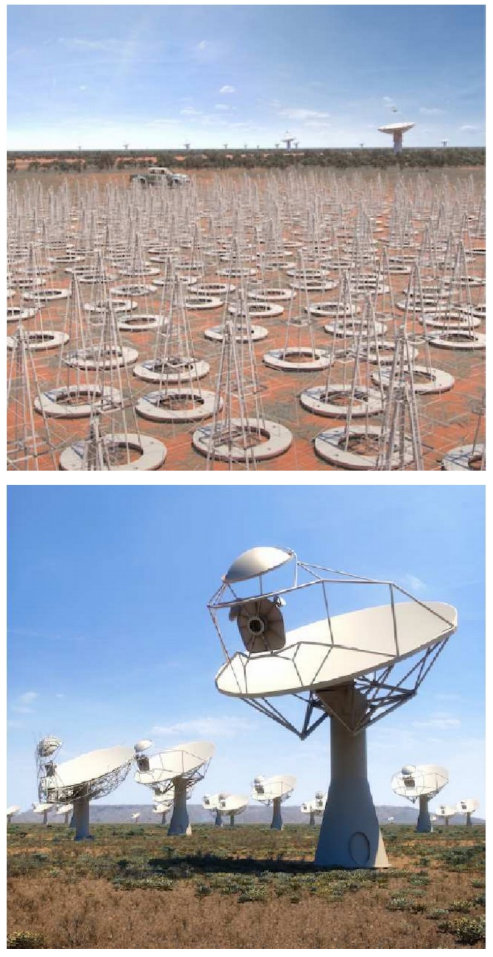
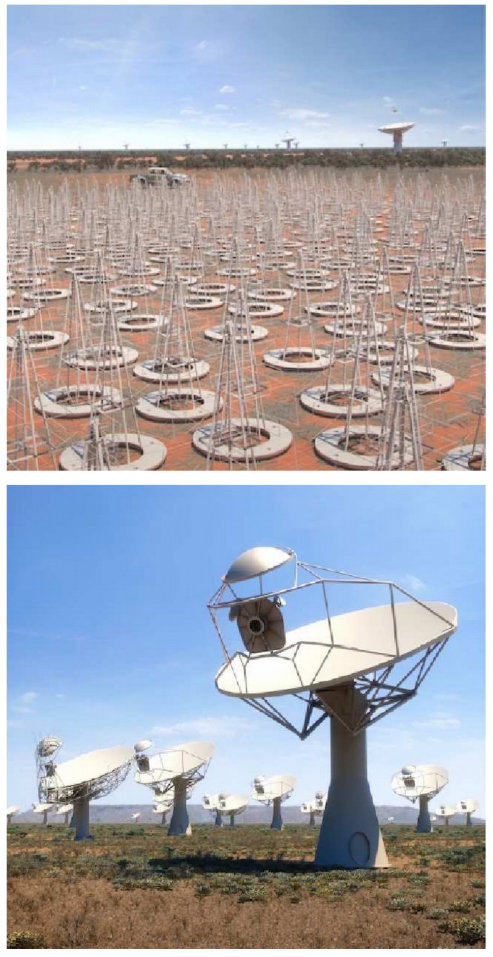
Although solar physics is one of the most mature branches of astrophysics, the Sun confronts us with many long standing problems that are fundamental in nature. Some of these problems, like the physics of shocks, are common across many astrophysical contexts and some others, like developing the ability to predict space weather, are of enormous societal relevance for the present technologically reliant society. Nindos et al. discuss how the Square Kilometre Array, the upcoming most ambitious radio telescope designed yet, can potentially lead to transformative advances in our understanding of the Sun and address some of these fundamental problems. In its first incarnation, SKA1 will comprise two instruments, the SKA1-Low aperture array (top panel) to be built in the Murchison region of Western Australia, and the SKA1-Mid dishes (bottom panel) to be build in the Karoo region of South Africa (image credit: SKA Organization). Nindos et al. summarise our current understanding of the key open problems in solar physics, based on work done across a large swathe of the electromagnetic spectrum. It then articulate the reasons why SKA observations can play an important role in answering some of these questions. These questions include: (1) the location and magnetic configuration of the electron acceleration site; (2) the mechanism(s) responsible for particle acceleration; (3) the flare-coronal mass ejection (CME) relationship; (4) the timing and evolution of CMEs from the early stages of development all the way to the outer corona; (5) the drivers of coronal shocks as well as the locations and efficiency of electron acceleration by shocks; and (6) the origin of solar energetic particles. This paper also showcases the recent work from the SKA precursors and pathfinders, namely the Murchison Widefield Array in Australia and the Low Frequency Array in Europe, which are already revealing previously unknown details of solar emissions and enabling more detailed and realistic modelling of solar phenomena. In addition, as is always the case with new instruments that outperform their predecessors in significant ways, it also emphasises the high probability of new discoveries that cannot yet be predicted.
Solar physics with the Square Kilometre Array
Although solar physics is one of the most mature branches of astrophysics, the Sun confronts us with many long standing problems that are fundamental in nature. Some of these problems, like the physics of shocks, are common across many astrophysical contexts and some others, like developing the ability to predict space weather, are of enormous societal relevance for the present technologically reliant society. Nindos et al. discuss how the Square Kilometre Array, the upcoming most ambitious radio telescope designed yet, can potentially lead to transformative advances in our understanding of the Sun and address some of these fundamental problems. In its first incarnation, SKA1 will comprise two instruments, the SKA1-Low aperture array (top panel) to be built in the Murchison region of Western Australia, and the SKA1-Mid dishes (bottom panel) to be build in the Karoo region of South Africa (image credit: SKA Organization). Nindos et al. summarise our current understanding of the key open problems in solar physics, based on work done across a large swathe of the electromagnetic spectrum. It then articulate the reasons why SKA observations can play an important role in answering some of these questions. These questions include: (1) the location and magnetic configuration of the electron acceleration site; (2) the mechanism(s) responsible for particle acceleration; (3) the flare-coronal mass ejection (CME) relationship; (4) the timing and evolution of CMEs from the early stages of development all the way to the outer corona; (5) the drivers of coronal shocks as well as the locations and efficiency of electron acceleration by shocks; and (6) the origin of solar energetic particles. This paper also showcases the recent work from the SKA precursors and pathfinders, namely the Murchison Widefield Array in Australia and the Low Frequency Array in Europe, which are already revealing previously unknown details of solar emissions and enabling more detailed and realistic modelling of solar phenomena. In addition, as is always the case with new instruments that outperform their predecessors in significant ways, it also emphasises the high probability of new discoveries that cannot yet be predicted.
The host galaxy of the fast-evolving luminous transient AT2018cow
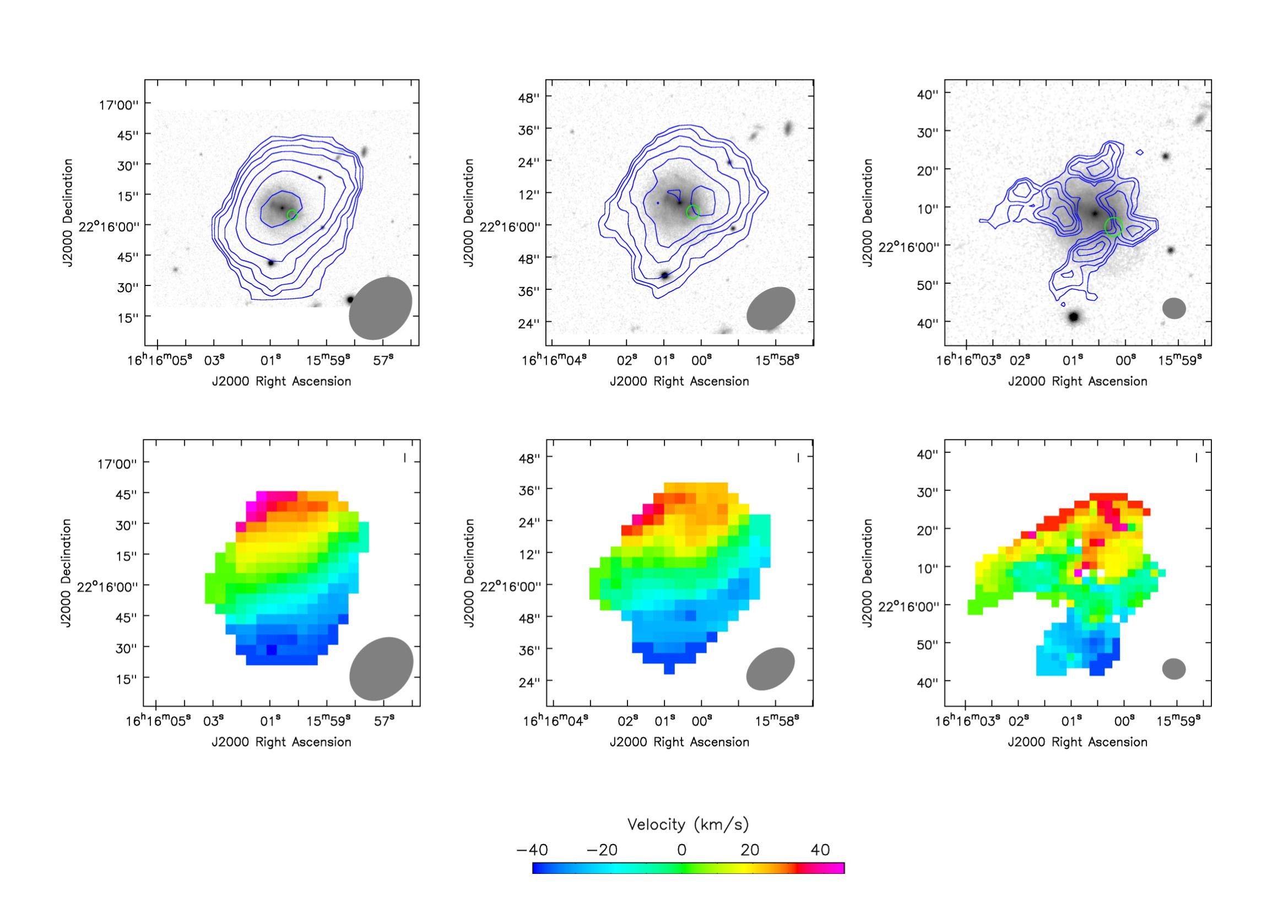
Roychowdhury et al. report Giant Metrewave Radio Telescope (GMRT) HI 21cm imaging of CGCG137-068, the host galaxy of the fast-evolving luminous transient (FELT) AT2018cow, the first study of the gas properties of a FELT host galaxy. They obtain a total HI mass of 660 million solar masses for the host galaxy, and an atomic gas depletion time of 3 Gyr and a gas-to-stellar mass ratio of 0.47, consistent with values in normal star-forming dwarf galaxies. At spatial resolutions of > 6 kpc, the neutral hydrogen of CGCG137-068 appears to be distributed in a disk, in mostly regular rotation. However, at spatial resolutions of 2 kpc, the highest column density neutral hydrogen is found to lie in an asymmetric ring around the central regions; AT2018cow lies within this high column density ring. This HI ring is suggestive of an interaction between CGCG~137-068 and a companion galaxy. Such a ring is ideal for the formation of compact regions of star formation hosting massive stars which are likely progenitors of FELTs. The figure shows the integrated HI 21cm intensity (top panels) and HI 21cm velocity field (bottom panels), at three different resolutions; the green circle in the top panels indicates the position of the FELT AT2018cow. The low-resolution images of the left and middle panels show that the large-scale HI 21cm emission is in the form of a regularly-rotating disk. The high resolution image of the right panel shows that the HI 21cm emission is distributed in a high-column density ring, with AT2018cow arising from the gas in this ring.
The peculiar radio pulses from the magnetic Bp star HD 142990
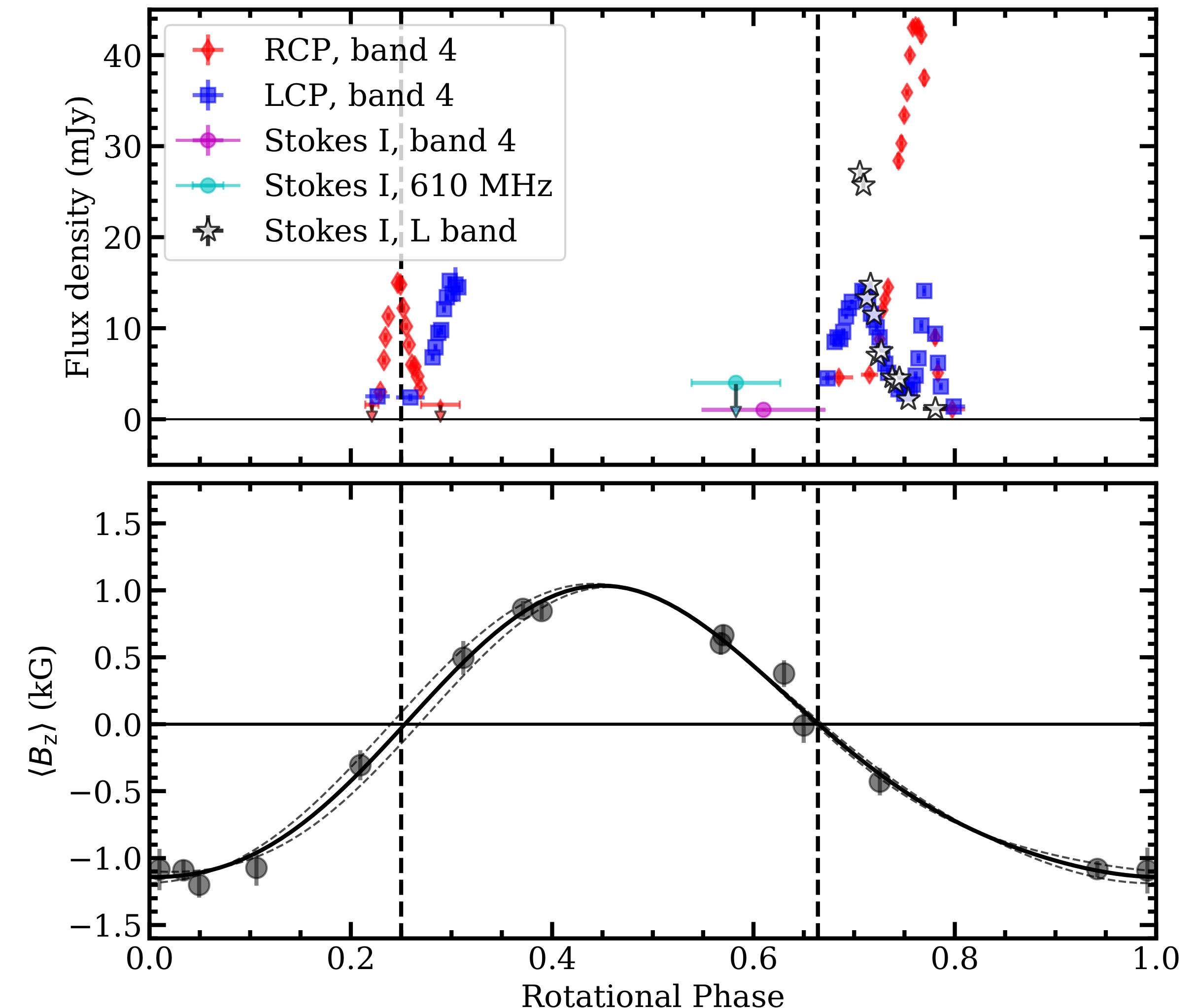
Radio emission from hot magnetic stars usually arises from the gyrosynchrotron process. However, a small number of these stars have been found to produce coherent radio emission generated by the Electron Cyclotron Maser Emission (ECME). This emission is observed in the form of highly circularly polarized pulses that arise close to rotational phases where the longitudinal magnetic field of the star is zero (i.e. the magnetic null phase). In the present work, Das et al. used upgraded Giant Metrewave Radio Telescope (uGMRT) observations to confirm the presence of ECME from another star, HD 142990, at frequencies ~550-850 MHz (speculated to be a possibility by Lenc et al. (2018), based on their detection of highly circularly polarized emission from the star with the Murchison Widefield Array). Das et al. observed the star around both the magnetic null phases, and found significant flux density enhancement in both circular polarizations near both magnetic nulls, consistent with the hypothesis that the detected emissions arise from the ECME mechanism. The ECME pulses are, however, peculiar in the sequence of arrival of the two circulate polarizations, with the observed pattern matching that from neither the extra-ordinary mode (X-mode) nor the ordinary mode (O-mode). Das et al. found that both circular polarizations at 550-850 MHz appear to originate near the same magnetic pole, which has not been observed earlier. To explain this unique observation, the authors propose a scenario involving a transition between magnetic-ionic modes. This observation of mode transition, if confirmed, will be the first of its kind in hot magnetic stars. Further observations at frequencies both above and below the range 550-850 MHz will be needed to test the validity of this hypothesis. The upper panel of the figure shows the variation of the flux density of the star at different GMRT frequency bands. Band 4 corresponds to the frequency range 550-850 MHz and L-band, to 1420 MHz. RCP and LCP stand for right and left circular polarization, respectively. The lower panel shows the variation of the star s longitudinal magnetic field; the latter data were obtained from Shultz et al. (2018). The enhancements in flux density occur close to the magnetic null phases, which is expected for ECME.
Inhomogeneities revealed in a supernova via low frequency GMRT observations
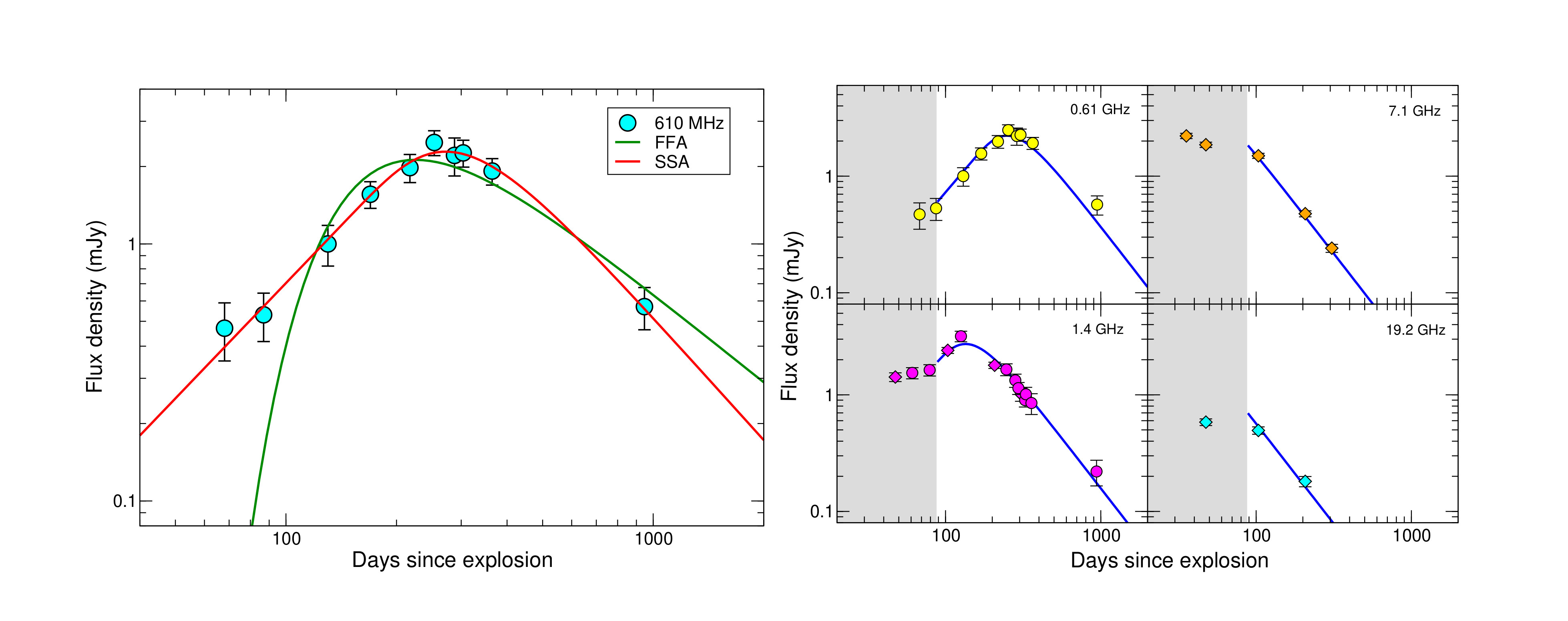
Radio emission from supernovae is considered to be synchrotron emission which is absorbed at early epochs. Since the absorption optical depth scales approximately proportional to the square of the wavelength, low frequencies are ideal to probe the optically thick phase. Chandra et al. used low-frequency Giant Metrewave Radio Telescope (GMRT) observations of a core-collapse (Type Ib) supernova, Master OT J120451.50+265946.6, to find that the radio-emitting shock is inhomogeneous, with the inhomogeneities confined within the magnetic field distribution. Because of these inhomogeneities, the absorption is due to the superposition of various optical depths caused by varying magnetic fields. The inhomogeneities are primarily visible at low frequencies, and the high-cadence, high-sensitivity GMRT observations were critical in unraveling the nature of the inhomogeneities, which has important implications for the size of radio emitting regions. The left panel of the figure shows a single-component synchrotron self-absorption model fit to the GMRT 610 MHz data on the supernova, in the optically thick phase; this reveals a very steep electron energy spectrum, which is highly unphysical. The right panel of the figure shows the best-fit model that incorporates inhomogeneous synchrotron self-absorption, again fitting to the supernova light curves. The data at 0.61 GHz and 1.4 GHz data are from the GMRT (with three 1.4 GHz data points from the Karl G. Jansky Very large Array (VLA)), while the 7.1 GHz and 19.1 GHz data are from the VLA. The data before day 87 have been excluded from the fit as the radio emitting shock was crossing a dense shell at this epoch.
Ionized carbon 158 micron Emission from z~4 HI Absorption-selected Galaxies
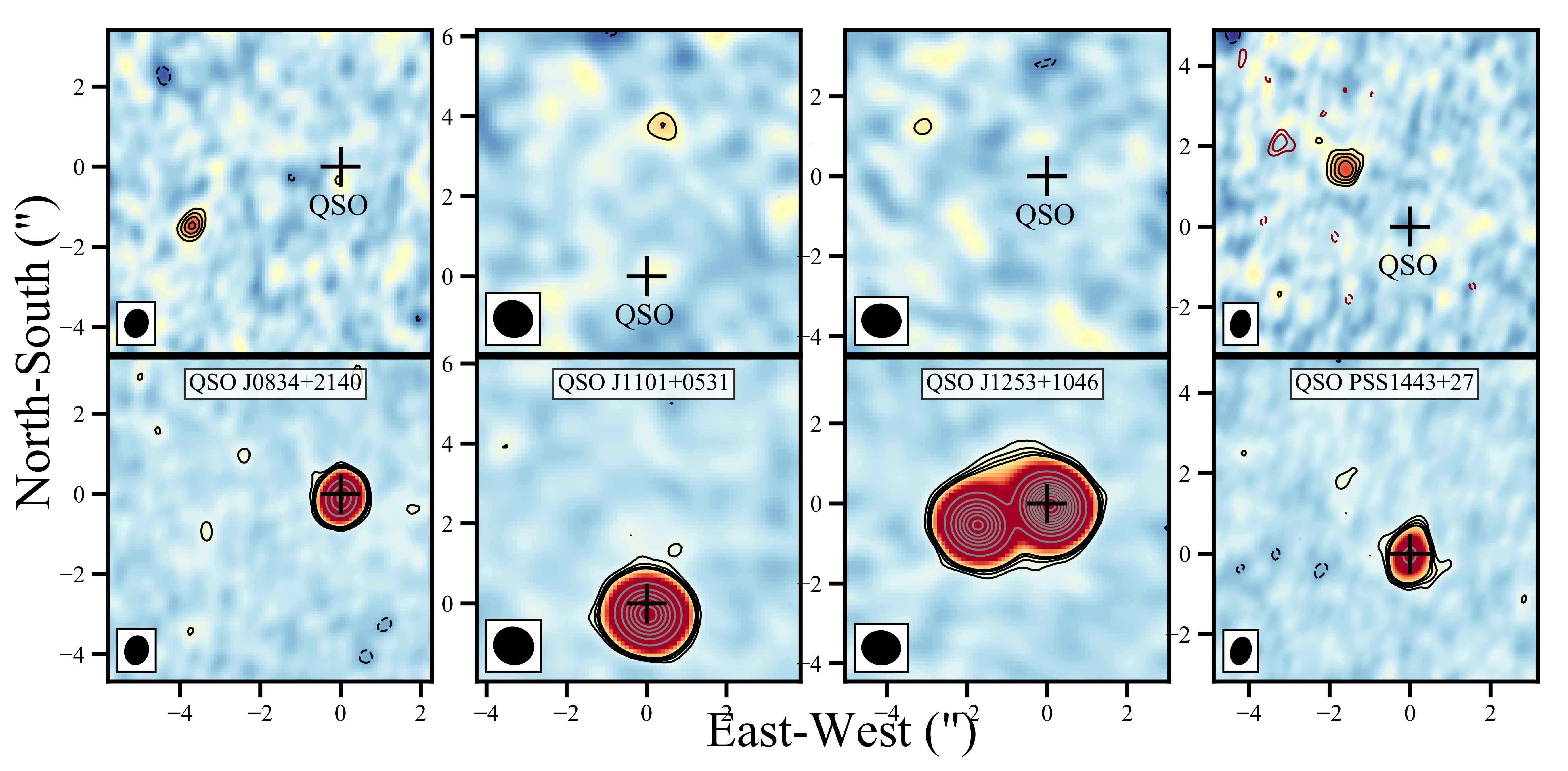
Neeleman, Kanekar et al. have used the Atacama Large Millimeter/sub-millimeter Array (ALMA) to carry out a search for the ionized carbon ([CII]) 158 micron emission line from galaxies associated with four high-metallicity damped Ly-alpha absorbers (DLAs) at z~4. They detected [CII] 158 micron emission from galaxies at the DLA redshift in three fields, with one field showing two [CII] emitters. Combined with previous results, Neeleman et al. have now detected [CII] 158 micron emission from five of six galaxies associated with targeted high-metallicity DLAs at z~4. The galaxies have relatively large impact parameters, ~ 16-45 kpc, [CII] 158 micron line luminosities of 0.04-3 billion solar luminosities, and rest-frame far-infrared properties similar to those of luminous Lyman-break galaxies, with star formation rates of ~7-110 solar masses per year. Comparing the absorption and emission line profiles yields a remarkable agreement between the line centroids, indicating that the DLA traces gas at velocities similar to that of the [CII] 158 micron emission. This disfavours a scenario where the DLA arises from gas in a companion galaxy. These observations highlight ALMA’s unique ability to uncover a high-redshift galaxy population that has largely eluded detection for decades. The figure shows (top panels) the integrated [CII] 158 micron flux density maps over channels containing line emission and (bottom panels) 350 GHz continuum images of the four quasar fields (with the plus sign indicating the quasar position). For the sole [CII] 158 micron non-detection, the [CII] line flux density is integrated over the central 100 km/s around the DLA redshift.
The Expanded Giant Metrewave Radio Telescope
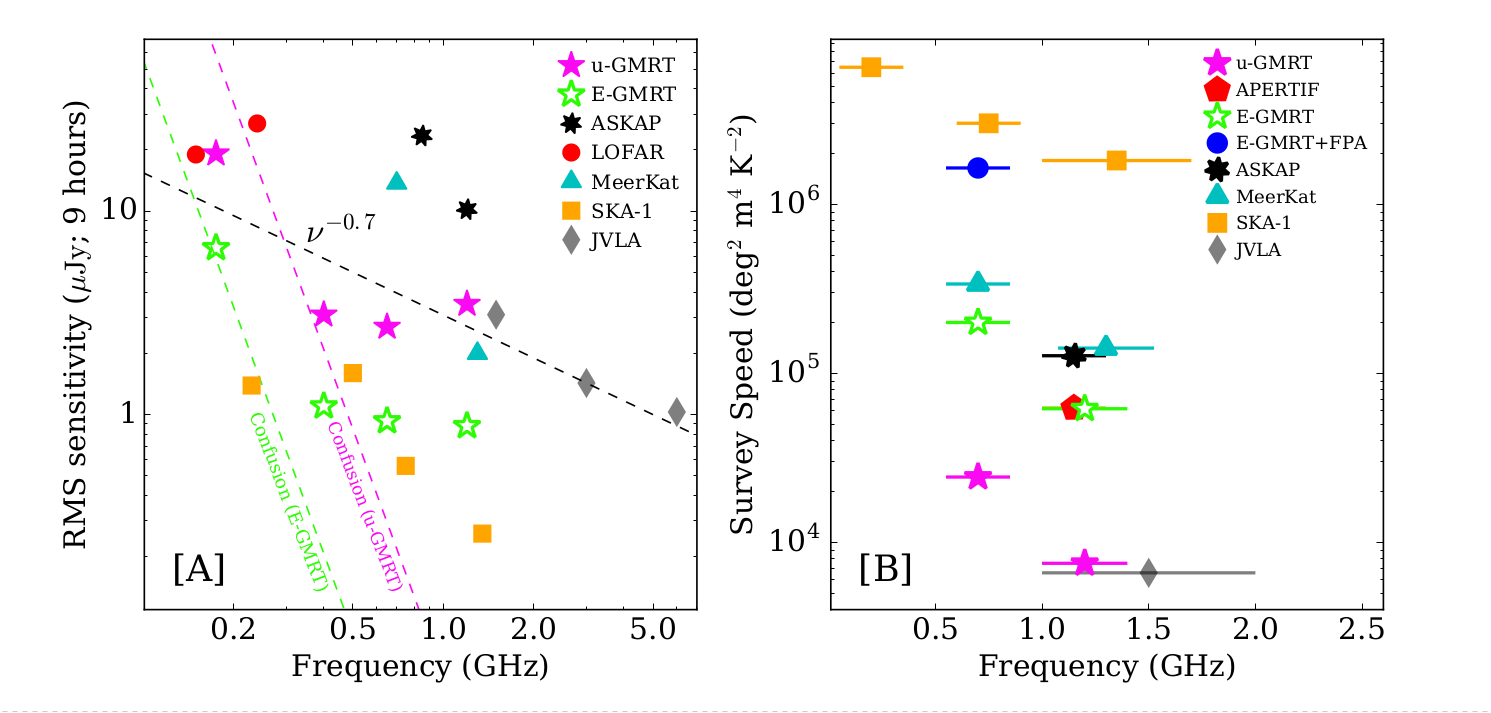
With 30 antennas and a maximum baseline length of 25 km, the Giant Metrewave Radio Telescope (GMRT) is the premier low-frequency radio interferometer today. Patra et al. carried out a study of possible expansions of the GMRT, via adding new antennas and installing focal plane arrays (FPAs), to improve its point-source sensitivity, surface brightness sensitivity, angular resolution, field of view, and U-V coverage. They carried out array configuration studies, aimed at minimizing the number of new GMRT antennas required to obtain a well-behaved synthesized beam over a wide range of angular resolutions for full-synthesis observations. This was done via two approaches, tomographic projection and random sampling, to identify the optimal locations for the new GMRT antennas. We report results for the optimal locations of the antennas of an expanded array (the EGMRT), consisting of the existing 30 GMRT antennas, 30 new antennas at short distances, roughly 2.5 km from the GMRT array centre, and 26 additional antennas at relatively long distances, roughly 5-25 km from the array centre. The collecting area and the field of view of the proposed EGMRT array would be larger by factors of, respectively, roughly 3 and roughly 30 than those of the GMRT. Indeed, the EGMRT continuum sensitivity and survey speed with 550-850 MHz FPAs installed on the 45 antennas within a distance of ~ 2.5 km of the array centre would be far better than those of any existing interferometer, and comparable to the sensitivity and survey speed of Phase-1 of the Square Kilometre Array. In the figure, the left panel shows the root-mean-square (RMS) continuum noise of the EGMRT compared with that of modern radio interferometers (the uGMRT, the JVLA, LOFAR, MeerKAT, ASKAP, and the SKA-1) for a 9-hour full-synthesis integration. The green and magenta dashed lines show the RMS confusion noise for, respectively, the EGMRT and the uGMRT, at the different observing frequencies. It is clear that source confusion will be a limiting factor for the EGMRT only in its lowest frequency band (125-250 MHz), where the sensitivity is likely to anyway be limited by systematic effects, rather than thermal noise. The right panel shows the survey speed figure of merit (e.g. Dewdney et al. 2015), of the EGMRT compared with that of other present or planned radio interferometers. For the EGMRT, we have considered two possibilities: the open green stars (EGMRT) refer to single-pixel feeds on all 86 antennas, while the solid blue circles (EGMRT+FPA) assume FPAs covering 550-850 MHz installed on the 45 antennas within ~ 2.5 km of the central square.
Long-term behaviour of a Type IIP Supernova, SN 2004dj, at radio frequencies
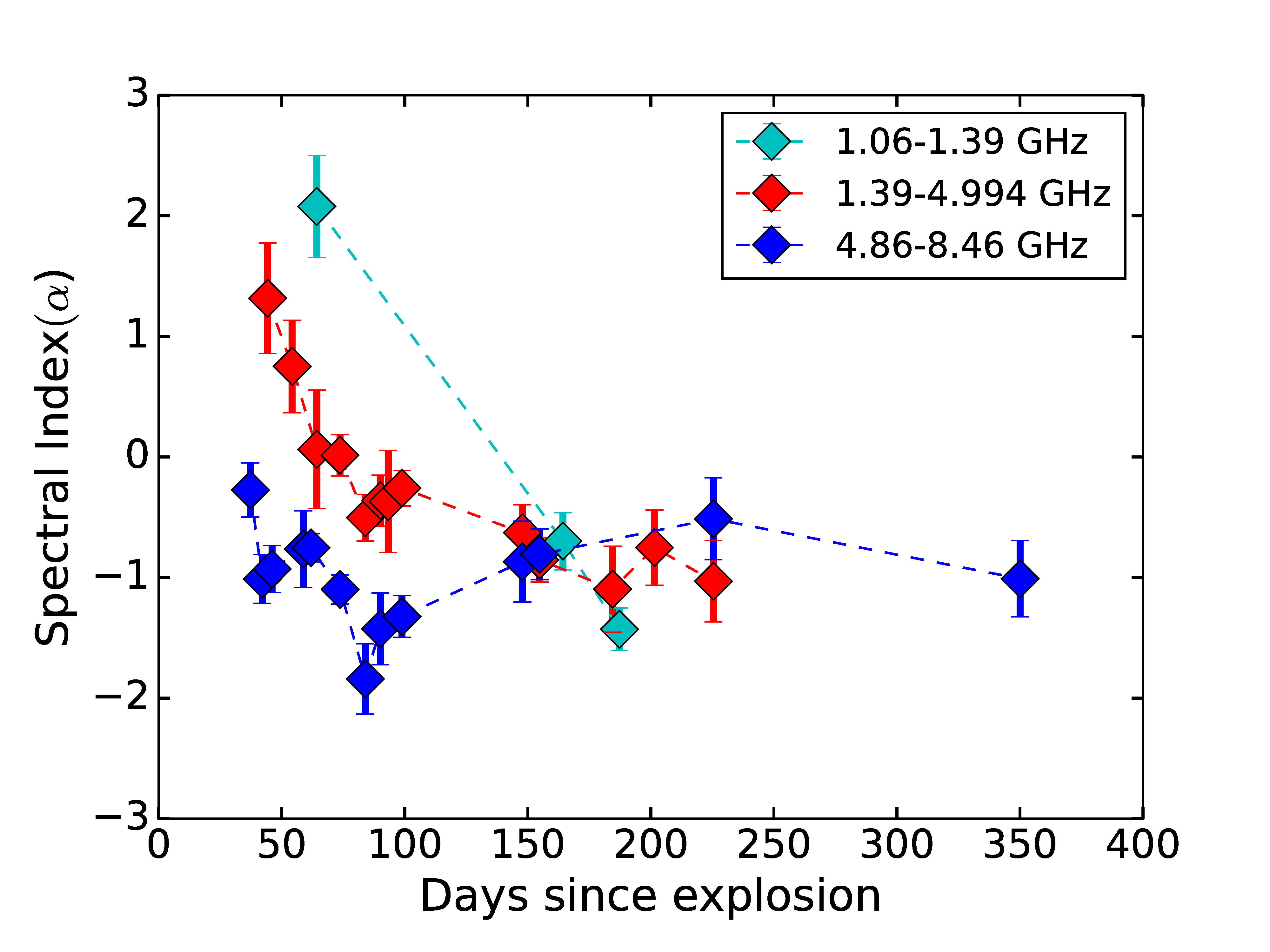
Radio emission from core-collapse supernovae carries information about the progenitor stellar system and immediate circumstellar environment. Nayana et al. used the Giant Metrewave Radio Telescope (GMRT) and the Very Large Array (VLA) to carry out a radio study of a Type IIP supernova, SN 2004dj, observing the source over both a wide range of frequencies (0.24 - 43 GHz) and a long time interval (covering ages from around 1 day to around 12 years after the discovery of the supernova). The wide frequency and temporal coverage allowed the authors to perform detailed modelling of local conditions in the supernova environment. Assuming a progenitor stellar wind velocity of 10 km/s, they infer the mass-loss rate of the progenitor star to be approximately a millionth of a solar mass per year. The derived value of the shock deceleration parameter is suggestive of a mildly decelerating blast wave. They studied temporal variation of the radio spectral indices between multiple frequency pairs (the figure shows the evolution of the spectral indices measured between frequencies of 1.06 and 1.4 GHz, 1.4 and 4.9 GHz, and 4.9 and 8.46 GHz), finding that the spectral indices steepen to values of -1 for an extended period from around day 50 to around day 125 after the explosion, especially at higher frequencies (between 4.86 and 8.46 GHz). This is indicative of electron cooling at the supernova shock. They calculate the cooling time scales and break frequencies for both synchrotron cooling and inverse-Compton cooling, and suggest that the steepening in spectral indices is due to inverse-Compton cooling of relativistic electrons at the supernova shock.