Basic Information On Corbett Tiger Reserve
Geography of Corbett Tiger Reserve
Corbett Tiger Reserve is spread over areas of Nainital, Almora, Pauri Garhwal and Bijnore Districts of Uttar Pradesh. The present area of the Reserve is 1318.54 sq. km. including 520.82 sq. km. of core area and 797.72 sq. km. of buffer area. The core area forms the Corbett National Park while the buffer contains reserve forests (496.54 sq. km.) as well as the Sonanadi Wildlife Sanctuary (301.18 sq.km.).
1,318.54 km²
Total Reserve Area
520.82 km²
Core Area (National Park)
797.72 km²
Buffer Area
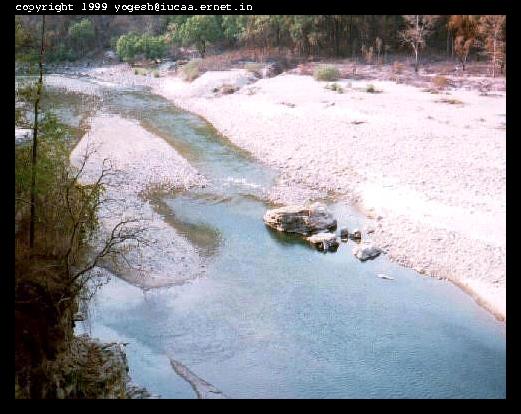
The core is bounded to the North by the Kanda Ridge, with a height of 1043 m at its highest point. The entire area of the reserve is mountainous and falls in the Sivalik and Outer Himalaya geological province. It forms the catchment area of the Ramganga, a tributary of the Ganga. The Ramganga flows from East to West in the reserve through landscapes of incredible beauty. The Ramganga was dammed at Kalagarh at the south-western end of the reserve in 1974. The reservoir created submerged 40 sq. km. of prime grassland. The area on the western side of the reservoir now constitutes the Sonanadi Wildlife Sanctuary.
Conservation History
8 August 1936
Established as Hailey National Park - India's first national park, named after Sir Malcolm Hailey, the then governor of the United Provinces. Major Jim Corbett was largely responsible for delineation of the park boundaries.
1947
After India attained independence, the park was renamed as Ramganga National Park.
1957
Renamed as Corbett National Park, in memory of Jim Corbett.
1973
Project Tiger, India's ambitious conservation program to save the tiger and its habitat was launched from Corbett.
1991
The area of the reserve was enlarged to its present area, with a large buffer area coming under the direct control of the Field Director.
How to get there
The headquarters of the Corbett Tiger Reserve are located in the town of Ramnagar. Ramnagar is a town located on the south-eastern boundary of the reserve. Ramnagar is conveniently accessible from Delhi via Moradabad and Kashipur. There is a train route to Ramnagar but the fastest way to reach it by bus from Delhi/Moradabad/Kashipur. Both private and government run services are available to go to Ramnagar. Hotel accommodation is available at Ramnagar. A Tourist Lodge is available adjacent to the Project Tiger complex. STD/ISD telephone facilities are also available.
Entry formalities
Important: Overnight visitors to Corbett require an entry permit as well as reserved accommodation in one of the Guest Houses. Reservations can be made at the Field Director's office in Ramnagar subject to availability. You are strongly advised to book in advance to avoid disappointment. You can do this by getting in touch with the Field Director by mail.
Where to stay
Accommodation is available at Bijrani, Gairal, Sultan, Sarpduli, Khinnanauli, Dhikala, Lohachaur and various other rest houses located in the Sonanadi Wildlife Sanctuary, which has been recently opened for tourists. Accommodation for staying at the Rest houses in Sonanadi Sanctuary can be booked at Kotdwar.
Dhikala - Main Tourist Complex
Dhikala is the largest tourist complex and houses a magnificent library which should not be missed. Elephant rides through the forest for viewing wildlife are available at Dhikala, reputed to have the highest density of tigers in the world. Tourist pressures are high at Dhikala during the season and it might be worthwhile to visit other locations that are as rewarding for the nature enthusiast, and much less crowded.
Flora of the Reserve
Corbett's floral diversity is mind boggling. In association with bhabar about 110 species of trees 51 species of shrubs, 27 species of climbers and 33 species of bamboo and grass are found.
110
Tree Species
51
Shrub Species
27
Climber Species
33
Bamboo & Grass
The dominant species of tree is Sal Shorea robusta which is found over 75% of the total area. In a few areas pure stands of sal are found. Trees like Haldu Adina cardifolia, pipal Ficus religiosa and Rohini Mallotus philipensis are also commonly found. Sheesham Dalbergia sissoo is found along the Ramganga river. Weeds such as Lantana sp. have overrun many parts of the forest and are a major nuisance.
Fauna of the Reserve
Great faunal diversity is found in Corbett because of its varied climate and habitats, abundant food sources and shelter and protection from human disturbance for half a century.
575
Bird Species
50
Mammals
26
Reptiles
7
Amphibians
Big Cats
Our encounter with the big cats was restricted to spotting pug marks, first at Lohachaur and then at Sultan. At both locations we found tiger pugmarks. At Dhikala, we were treated to a number of heart rending tiger roars during our visit to the Gulargatti watch tower. We found no evidence of any other member belonging to the cat family.
Deer Family
The Deer family representatives at Corbett gave us the pleasure of a thousand sightings. Barking Deer were ubiquitous at Lohachaur and we sighted them at Dhikala and Bijrani too. Sambar were sighted at Dhikala, Bijrani, Lohachaur and at numerous places along the Ramnagar Dhikala road. Chital herds were spotted all over the park. The largest herd we saw numbered 115 animals. They were placidly grazing on the dry river bed of the Ramganga at Dhikala.
Other Mammals
Wild Pig were spotted by us at Dhikala. Corbett's wild pigs are huge, probably due to the abundant food supply. Boars have been known to tip the scales at an imposing 100 kg.
At Lohachaur, we frequently spotted troops of langurs around the Mandal river. Rhesus macaques were also spotted by us in this region.
Note: We were unable to record the presence of hog deer, leopard, and mugger etc. that have been previously recorded in the areas of Corbett that we visited. There are two main reasons for this: the short duration of our visit and our extremely limited experience in the field.
Floral and Faunal List
Only species observed by us have been listed. The complete Checklist is much bigger and may be found elsewhere [1]. The birdlist includes the reference number of each bird as given in the Pictorial Guide to the Birds of the Indian Subcontinent in the first column. This should remove all ambiguity and facilitate easy reference. It should be noted that only the birdlist is fairly complete. The plant list is very short because of our shortcomings in identification & our preoccupation with birds.
Bird Checklist (80+ species observed)
| Ref# | Species | Frequency |
|---|---|---|
| 181 | Himalayan Griffon | O |
| 139 | Shikra | O |
| 311 | Common Peafowl | C |
| 294 | Kalij Pheasant | C |
| 299 | Red Jungle Fowl | C |
| 366 | Red Wattled Lapwing | C |
| 369 | Spurwing Lapwing | O |
| 401 | Common Sandpiper | F |
| 506 | Green Imperial Pigeon | O |
| 516 | Blue Rock Pigeon | C |
| 534 | Indian Ring Dove | C |
| 537 | Spotted Dove | C |
| 546 | Alexandrine Parakeet | C |
| 558 | Blossom Headed Parakeet | C |
| 573 | Common Hawk-Cuckoo | H |
| 576 | Indian Cuckoo | H |
| 675 | Longtailed Nightjar | F |
| 680 | Common Indian Nightjar | F |
| 680 | Common Indian Swift | C |
| 750 | Small Green Bee-Eater | C |
| 755 | Indian Roller | F |
| 717 | Himalayan Pied Kingfisher | O |
| 719 | Lesser Pied Kingfisher | C |
| 735 | White Breasted Kingfisher | C |
| 722 | Small Blue Kingfisher | C |
| 763 | Hoopoe | F |
| 778 | Great Hill Barbet | C |
| 782 | Large Green Barbet | C |
| 788 | Blue Throated Barbet | C |
| — | Golden Backed Woodpecker | F |
| — | Pied Woodpecker | O |
| 804 | Rufous Woodpecker | C |
| 809 | Black Naped Green Woodpecker | F |
| 813 | Large Yellow-Naped Woodpecker | F |
| 952 | Golden Oriole | F |
| 958 | Black-Headed Oriole | F |
| — | Common Swallow | C |
| 1081 | Scarlet Minivet | F |
| 1089 | Rosy Minivet | — |
| 1093 | Small Minivet | F |
| 1106 | Orange-Bellied Chloropsis | C |
| 1123 | White-Cheeked Bulbul | C |
| 1128 | Redvented Bulbul | C |
| 1147 | Brown-Eared Bulbul | F |
| 1148 | Black Bulbul | O |
| 963 | Black Drongo | C |
| 967 | White-Bellied Drongo | O |
| 1027 | Red-Billed Blue Magpie | O |
| 1032 | Indian Tree-Pie | O |
| 1040 | Andaman Tree-Pie (????) | O |
| 1049 | House Crow | O |
| 1054 | Jungle Crow | C |
| 1794 | Grey Tit | O |
| 1809 | Yellow Cheeked Tit | O |
| 1830 | Chestnut Bellied Nuthatch | C |
| — | Tree Creeper | O |
| 1274 | White-Throated Laughing Thrush | O |
| 1283 | White-Crested Laughing Thrush | C |
| 1720 | Indian Robin | O |
| 1661 | Magpie Robin | C |
| 1684 | Little Forktail | F |
| 1688 | Spotted Forktail | O |
| 1733 | Orange-Headed Ground Thrush | O |
| 1752 | Black Bird | O |
| — | Warblers (species unidentified) | C |
| 1429 | Small Niltava (?) | F |
| 1442 | Tickell's Blue Flycatcher | O |
| 1445 | Verditer Flycatcher | O |
| 1439 | Pale Blue Flycatcher | O |
| 1440 | Blue Throated Flycatcher | O |
| 1455 | White-Throated Fantail Flycatcher | F |
| 1461 | Paradise Flycatcher | C |
| 946 | Rufous Backed Shrike | F |
| 1884 | Grey Wagtail | O |
| 1891 | Large Pied Wagtail | C |
| 1006 | Indian Myna | C |
| — | Purple Sunbird | O |
| 1933 | White-Eye | F |
| — | House Sparrow | O |
| 2060 | Crested Bunting | F |
| 1115 | Blackheaded Yellow Bulbul | F |
| 1008 | Bank Myna | F |
Frequency Key
Seen 5 or more times
Seen 2 to 4 times
Seen only once
Heard only
Daily Log
Got up at 0530. Many birds in campus of Project Tiger office -- Indian Tree Pie, Sunbirds, Mynas. Went and met FD (Field Director). He sent us to the Deputy FD Shri. Rajiv Bhartari. Sat with him and chalked out our program for the following five days. Went to reception office and made reservations. Shri Bhartari came and gave us a talk on Corbett Tiger Reserve, standing near the map at the reception. Met FD and talked to him about concessions in accommodation. We were charged a concessional rate of Rs. 100 /day for the whole group. Got permits and receipts from reception.
Left for Bijrani in the afternoon. Entered CNP (Corbett National Park) for the first time through Amdanda gate. Hoopoe on road. Few cheetal. Reached Bijrani after 30 minutes. Tree house— Costly canteen— Elephant rides— Forest RH— rich public— Resident RW Lapwing pair, probably on nest, Bulbuls, Spotted Dove, Scavenger Vulture etc. Went down to River Bank. Solitary wild elephant in the distance. Small Blue Kingfisher, Large Pied Wagtail on river bank.
Left at 3 p.m. in Forest Dept vehicle for ride beyond Bijrani, in Bijrani Malani Tal area. 2 hour ride. Frequent spotting of Cheetal, Sambar, Langur. No Rhesus Macaques. One group of 2 elephants seen — Tuskers. Tortuous, steep winding road. Traveled about 30 km. in two hours. Rested at Bijrani for ~ 45 minutes. Short ride once again. Barking deer spotted. Reached Ramnagar at 1915. Dinner out. Ganne ka ras. Slept at 2130.
Got up at 0545. Bought provisions. Potatoes, rice etc. Breakfast at 0930. Got into bus for Lohachaur. Extremely crowded. Bus left at 0900. Mud road beyond Dhangarhi gate. Steep ups and downs. Rivers crossed on flimsy looking bridges. Reached Lohachaur at 1130.
Great FRH! British Raj time suites with running water and a fireplace. Surrounded by thick sal jungle. Prepared Maggi noodles for lunch. Had bath in river. Sighted Common Skink.
At 1630 left on trail. We walked some distance along the river upstream. Not too many birds. Peafowl, Red Junglefowl on river bed. Also Drongos, Blossom headed Parakeets, Rufousbacked Shrike. Saw fresh elephant dung and tracks. Big troop of Common Langur feeding on sheesham island. Returned at 1845. Ate kheer and rice. Slept at 2100. Night completely silent. No barking deer barks.
Got up at 0545. Left for trail on road to Durgadevi with guide who was starting tiger census procedures. Orangeheaded Ground Thrush, Spurwing Lapwing, Small Minivet, Blossom headed Parakeet. Saw fresh elephant dung and tracks. Tracked elephant ~ 750 m. Black Bulbul seen. Returned at 0945. Ate Bhurji and tomato soup. Slept in the afternoon.
Evening looked stormy. Went along road on Maidavan side. Saw barking deer, Kalij Pheasant, Lesser Goldenbacked Woodpecker and male Crested Bunting. Within minutes the sky was covered with thick clouds and a howling wind stared blowing throwing up a lot of dust. We ran back to the FRH. Rain started after 1/2 hour. Not very heavy. Ate dal—chaval. Slept at 2130.
Got up at 0400. We were supposed to accompany forest guard on his beat. Tiger census was starting today. The guard had a map of his area. Today he would go around just wiping off the pugmarks that he saw. Walked towards Durgadevi with him. Fleeting glimpses of Redbilled Blue Magpie and an unidentified bird, probably a Great Hill Barbet. The bird would sit on trees with dry leaves and then disappear as we neared. We were not able to get a good look at it. Many butterflies but not much variety. Striped Tiger, Blue Tiger, Common Crow, Common Jezebel.
On return journey, saw 4 Redbilled Blue Magpies trying to shoo away a Rhesus Macaque feeding in their area or near their nest (?). Extremely beautiful sight. When we were watching the magpies, the Forest Dept. vehicle arrived to pick us up. We left for Sultan at 1000. reached at 1145. Lunch of Maggi noodles and soup.
Left for a waterhole ~200m away at 1715. Heard dry leaves crackling near waterhole. Turned out to be a small herd of cheetal. All the animals were very well camouflaged and silent even while moving about on a dry leaf bed. Saw bear claw marks on a tree. Saw Broad Billed Roller at the Sultan FRH after sunset. It seemed much smaller than the size mentioned (Pigeon +-). Saw Longtailed Indian Nightjar pair at dusk.
At night saw another nightjar sitting on a dried branch ~ 5 feet above the ground. Eyes shine brightly in torchlight, but not as brightly as Cheetal. Also spotted a male Cheetal stag in torchlight. We tried to follow it. It bolted when we were about 50 feet away. Did some stargazing. M44 stunning. Ursa Minor high up and clearly visible. Sisodia bitten inside room by a tiny scorpion, hardly bigger than a cockroach. Gave him a pain killer and applied some antiseptic cream. A little swelling on his toe where the scorpion had bitten him. Rainstorm around midnight. Night colder than usual.
Tiger Pugmarks!
Got up at 0400. Left with forest guard Naqvi on road to Dhangarhi. Saw fresh, clear tiger pugmarks in a nearby sot. The pugmarks were only a few hours old. (It had rained around midnight.) He put a glass plate on top of the best pugmark and traced its outline on it, which was later transferred to tracing paper. Guide told us that the pugmarks were of a tigress. (elongated egg-shaped toe marks — tigress. Circular toe marks — tiger).
New forest guard, inexperienced and scared of the jungle. made so much noise that there was little chance of spotting wildlife. We followed numerous streams and soon got lost. Used some rough idea on the direction we ought to take and made it back to Sultan. Then went on mud road towards Gairal. Reached river bed and waited for birds. Nothing seen. Came back and packed up. Lunch of dal-rice.
At 1630 Shri. Bhartari arrived and gave a lift to 3 of us to Dhikala. They stopped at Gairal, Sarpduli, Khinnanauli and High Bank, where they saw a Gharial male basking on the river bank. Rest of reached Dhikala by bus.
Dhikala complex quite large. Electricity available. Many hutments, loghuts (dormitories), best wildlife library anywhere, dhaba, restaurant, range officers quarters, elephants, mahouts and a shed for screening movies etc. Not much crowd. a herd of 150 cheetal feeding on dried up river bed. Dinner at restaurant. Costly. Slide show by Shri. Bhartari. Some star-gazing done. Slept in anticipation of a fruitful elephant ride the next morning.
6 of us on each elephant. My elephant went on chaur side. Other elephants went across the river. Saw wild pig and jackal.