The University of Pune Campus
As I walked through the gate of the University of Pune one and a half years ago I did not know that this was the start of a bond that was to last a lifetime. My first impression of this place was very similar to that of a parched wanderer in the Sahara when he spots an oasis. Since childhood I have always had a fascination for Nature.
Twenty years in Bombay had not provided me an opportunity to be in close proximity with nature, but this place presented me that and not for a day or two, but for two years. This University, provided me with an excellent opportunity for pursuing my interest in birds.
The University of Pune, in addition to being a highly esteemed educational institution is also famed for its variety of ecosystems spread over an area of about four hundred acres. University campus has the largest cultivation of Dalbergia, open drylands, scrublands, few evergreen patches, agricultural farmlands and small waterbodies. All these together form a very fascinating combination of ecosystems.
Seasonal changes are very well noticed here. The tiny green leaves of Dalbergia melanoxylem and green carpets on the ground disappear soon after monsoon. Cold breeze sweeps away the greenery, but soon the warmth of the spring sprinkles pink and red colours on the Glyricidia and Silk Cotton trees. In March a brilliant yellow appears on the Cassias. Small dark red Ficus fruits attract not only the eyes of the passerby but also a variety of birds.
This campus locally known as Ganeshkhind lies at 18 degrees 34' North latitude and 73 degrees 53' East longitude. It has a mean elevation of about 575 metres above sea level. The total area of the campus is 6,50,000 square metres out of which 1,16,619.8 square metres is used for construction. Average maximum temperature over the last two years has been 30 to 35 degrees Celsius and the average minimum temperature is 18 to 20 degrees Celsius. This place receives average annual rainfall of 900 to 1000 mm usually over four months in a year, from June to October.
Observations
My observations cover a period of one and half years, July 1993-December 1994. The observations were made at least once a week. The birds were identified by plumage, through binoculars following The Book Of Indian Birds and The Pictorial Guide to the Birds of the Indian Subcontinent.
The checklist contains seventy six species of birds. When this list was compared with the checklist made by Dr. Goel in 1974, 22 species of birds were present in that list that were not sighted by me.

This campus provides shelter for variety of birds. Some are migratory but most of them are residential. Although the distribution is more or less uniform there are patches like University Park, old swimming pool, nursery and Botany garden which have a higher density of birds than other places in the campus. Paradise Flycatcher, Hornbill and some waterbirds are the major attractions of University Park.
Conservation Note: Birds like Pheasant-tailed Jacana are not seen on the campus anymore. The forested area is being drastically reduced. University park which is good bird habitat, is also highly disturbed as it has become a favoured picnic spot.
Key
List 1: Bird Checklist
| Whitebacked Vulture | Gyps benghalensis |
| Pariah Kite | Milvus migrans |
| Shikra | Accipiter badius |
| Blackwinged Kite | Elanus caeruleus |
| Pond Heron | Ardeola greyii |
| Night Heron | Nycticorax nyctycorax |
| Cattle Egret | Bubulcus ibis |
| Little Egret | Egretta garzetta |
| Blue Rock Pigeon | Columba livia |
| Spotted Dove | Streptopelia chinensis |
| Little Brown Dove | Streptopelia senegalensis |
| Pied Crested Cuckoo | Clamator jacobinus |
| Indian Koel | Eudynamys scolopacea |
| Crow Pheasant | Centropus sinensis |
| Whitebreasted Kingfisher | Halcyon smyrnensis |
| Small Blue Kingfisher | Alcedo atthis |
| Large Grey Babbler | Turdoides malcolmi |
| Jungle Babbler | Turdoides striatus |
| Paradise Flycatcher | Terpsiphone paradisi |
| Tickell's Blue Flycatcher | Muscicapa tickelliae |
| Magpie Robin | Copsicus saularis |
| Indian Robin | Saxicoloides fulicata |
| Tailor Bird | Orthotomus sutorius |
| Purplerumped Sunbird | Nectarinia zeylonica |
| Purple Sunbird | Nectarinia asiatica |
| Grey Hornbill | Tockus birostris |
| Jungle Crow | Corvus macrorhyncos |
| House Crow | Corvus splendens |
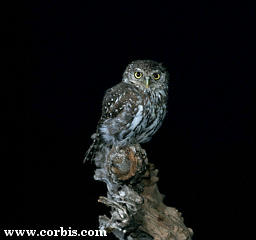
| Spotted Owlet | Athene brama |
List 2: Other Sightings
- Rosy Pastor
- Alexandrine Parakeet
- Booted Hawk Eagle
- Short-toed Eagle
- Small Indian Pratincole
- Drongo Cuckoo
- Tickell's Flowerpecker
- Mottled Wood Owl
- Common Indian Nightjar
List 3: Historical Records
- Indian Bustard Quail
- Pheasant Tailed Jacana
- Yellow-wattled Lapwing
- Fantail Snipe
- Painted Snipe
- Redwhiskered Bulbul
- Blue Rock Thrush
- Little Grebe
- Green Pigeon
Acknowledgements
I am obliged to Dr. Jagadale and his wife, Neelam for their encouragement and helpful suggestions. To Dr. Ajit Kembhavi for his valuable comments and suggestions.
I am indebted to Dr. Gadgil of the Geography Department and the people at the Estate Office for providing me with the necessary information regarding the University campus.
References
- Ali, S. 1979. The Book Of Indian Birds, B.N.H.S., Bombay.
- Ali, S. and Dillon Ripley, S., Handbook of the Birds of India and Pakistan. Compact Volume. 1983. Oxford University Press.
- Ali, S. and Dillon Ripley, S., The Pictorial Guide to the Birds of the Indian Subcontinent. B.N.H.S., Bombay.
- Dr. Humayun Abdulali, Checklist of the Birds of Maharashtra.
- Goel Dr. Suresh, 1976, Birds of the Campus of Poona University, Journal of the University of Poona.