Report Author
Yogesh Wadadekar
January 1996
Acknowledgements
We gratefully acknowledge the help and cooperation received from Project Tiger authorities at Namdapha Tiger Reserve particularly the Field Director, Mr. R.N. Naik, who made our stay at Namdapha a most pleasurable and memorable experience.
We also take this opportunity to thank Prof. U.B. Desai (Chairman Cultural) and Prof. Dipan Ghosh (Dean Student Affairs) for support and assistance for our trip.
This report complements our 1993 Namdapha report, with updated observations and expanded species lists from our return visit in December 1995.
1. Basic Information on Namdapha Tiger Reserve
1.1 Geography
1,985 km²
Total Area
1,808 km²
Core Area
177.4 km²
Buffer Area
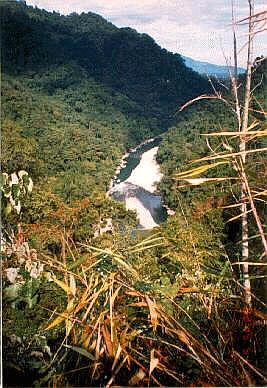
Namdapha Tiger Reserve lies in the Changlang District of Arunachal Pradesh, the easternmost state of the Indian Union. The park is bounded to the North by the Dapha Bum Ridge, a long range of mountains stretching East-West with Dapha Bum peak (4598 m) as its highest point. To the south lie the Patkai Ranges on the Indo-Myanmar border.
The entire area of the reserve is mountainous and forms the catchment area of the Noa-dehing (also known as the Diyun) a tributary of the Brahmaputra. The Diyun flows from East to West in the reserve. Besides the main river, there are several natural lakes (locally called beels) including Moti Jheel (near Gibbonsland), Rani Jheel (between Bulbulia and Firmbase), and Raja Jheel.
Climate & Vegetation
The Diyun Valley opens to the upper Brahmaputra Valley where monsoon clouds get trapped causing extremely heavy rainfall for almost 8 months of the year with a short winter (October-January) being comparatively dry.
Unique Feature: The Diyun has a remarkably low valley floor (less than 150 m at mouth, less than 1500m at uppermost reaches 175 km east), allowing tropical vegetation and climate throughout the length of the valley.
Historical Migration Route
The Diyun Valley has been a major migration path into India for Arunachal tribes originating from Thailand or further East. The valley is the only route free of snow linking Upper Myanmar with the Assam Valley.
The Lisu Tribe: Today settled at Gandhigram at the Eastern end of the reserve (~1000 people). Famed for their knowledge of the jungle and hunting prowess.
1.2 How to Get There
Headquarters: Miao (quaint town on eastern boundary)
Access Route: Via Tinsukia, Assam (110 km)
Transport Options:
- Bus Tinsukia-Miao: Rs. 26, 4 hours (Regular services by Assam & Arunachal State Transport)
- Night Bus Tinsukia-Gauhati: Rs. 145, 11 hours
- Nearest Airport: Mohanbari (Dibrugarh)
1.3 Entry Formalities
Permits Required
Indian Citizens: Inner Line Permit
Foreigners: Restricted Area Permit
Issuing Authority: Secretary (Political), Government of Arunachal Pradesh, Itanagar
Application: Apply at least two months in advance with all details (DOB, age, local & permanent address)
Alternative: Resident Commissioner in New Delhi (7 days processing)
Entry Point: Namchik Checkpoint (beyond Jagun, Assam)
1.4 Where to Stay
Miao (Transit)
- Circuit House (usually for officials)
- Inspection Bungalow
- Transit Lodge
Deban (27km from Miao)
Forest Rest House on Diyun banks (often VIP-booked)
Facilities: Water, cooking on wood fire, catering available
Buffer Zone Research Accommodation
Simple bamboo huts at: Haldibari, Hornbill Camp, 27th Mile Camp, Bulbulia, 40th Mile Camp
Free or minimal cost. Basic water facility and wood fire cooking only.
1.5 Flora of the Reserve
Significance: The lowland tropical forests of Namdapha are perhaps the last remaining Dipterocarpus forests in India.
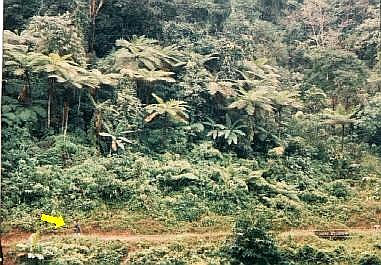
Found in the Diyun Valley and hills up to certain elevation. Typically three-storeyed with Hollong and Mekai forming the dominant layer. Top storey also contains Hollock (Terminalia myriocarpa) and Jhutuli (Altinsia excelsa).
The understorey is extremely dense with woody shrubs, climbers, ground orchids (Dendrobium spp.) and ferns. The variety of saprophytic fungi is staggering.
Ferns: Profuse and giant-sized, including handsome tree ferns Cyathea spp. and Angiopteris evecta.
Found on alluvial flats, along rivers and stream banks and on hill slopes. Most species in the top storey shed their leaves.
Canopy: Hollock and Khokan (Duabanga grandiflora)
Understorey: Dominated by Bamboos (Bambusa spp. and Dendrocalamus sp.). Climbers also plentiful.
Scattered patches of Khokan, Borpat, Hilika with very dense undergrowth containing canes.
Invasive Species: Where natural vegetation has been disturbed, Mikenia cordata has invaded and prevented regeneration.
1.6 Fauna of the Reserve
World-Class Biodiversity
The richness of Namdapha's faunal heritage is comparable to the best preserved tropical forests anywhere in the world.
85 of 135 genera of land mammals recorded in India are represented here.
Four Big Cats
Namdapha is the only reserve in the world to house four species of big cats:
- Tiger
- Leopard
- Snow Leopard (rare - less than 5 sightings/decade)
- Clouded Leopard (rare - less than 5 sightings/decade)
Their continued existence presumed due to absence of human pressures.
Hoolock Gibbon
India's only ape - the hoolock gibbon (Hylobates hoolock).
"Mornings in Namdapha are punctuated with the intermittent calling of troops of gibbons, vying with each other in trying to shatter the silence of the morn."
1995 Observation: Heard on numerous occasions but not sighted (contrast to 1993 when observed on dozen occasions).
1995 Observations
Primates
Capped Langur (Presbytis pileatus): Observed near Embeong
Assamese Macaque: Observed near 22nd Mile
Squirrels - A Prime Attraction
Malayan Giant Squirrel: Observed feeding on flowers right behind Deban dormitory
Hoary Bellied Himalayan Squirrels: At Deban
Orangebellied Himalayan Squirrel: At Deban and 40th Mile Camp
Big Cat Evidence
Leopard: Profusion of pug-marks on Miao-Vijaynagar road, especially near 40th Mile Camp. Droppings found on 3 occasions.
Tiger: Pug-marks seen on 3 occasions between 27th Mile and 34th Mile.
Jungle Cat (?): Pug-marks near 40th Mile (identification uncertain)
Fishing Cat: Pug-marks at Embeong
Highlight: Barking Deer Sighting
On our journey from Miao back to Deban we sighted a barking deer standing right in the middle of the road. As soon as it saw the jeep it sprinted away.
Barking deer calls were heard at several places after 34th Mile Camp even during the day. In the vicinity of 40th Mile Camp, rustling in the undergrowth was followed by a loud bark from 50-100m away.
During our second night at 40th Mile Camp we heard barks outside a few minutes after getting into our sleeping bags.
1.7 Suggestions for Improving Visitor Facilities
Cardinal Principle: Strike a happy balance between exposing maximum people to wildlife and reducing disturbance to wildlife from tourists.
- Curtail day visitors to Deban: Visitors from Assam coal and oil fields treat the reserve as their backyard, causing disturbance
- Encourage overnight travel beyond Deban: Up to 40th Mile Camp for genuine enthusiasts, ensuring accommodation doesn't fall into disuse
- Solve water problems: At 22nd and 27th Mile Camps
- Maintain MV Road: In motorable condition up to 20 Mile Camp (incredible views)
-
Interpretation Center at Deban should highlight:
- Namdapha's floral and faunal diversity and reasons for it
- Need to protect tropical rainforests (global environmental disaster prevention)
- Steps individuals can take to reduce rainforest product use (timber)
- Project Tiger aims and justification
- Replace elephant rides with guided walks: Trained guides + Nature Trail around Deban for self-exploration
Appendix A: Participants
- Yogesh Wadadekar 90011005 H4/124
- Sandeep Tambe 90010017 H4/119
- Amit Verma
- Shrikant Aithala
- Ajay Gopal
- Dhaval Doshi
- Venkatesh Rao
- Yashodhan Joshi
Appendix B: Floral and Faunal List
Only species observed by us have been listed. A more complete Checklist (with contributions from Salim Ali and Dillon Ripley) may be found elsewhere.
Location Key
1: Miao
2: Deban
3: 22nd Mile
4: 27th Mile
5: 34th Mile
6: 40th Mile
7: Embeong
B.1 Birds (51 species)
| English Name | Scientific Name | Locations |
|---|---|---|
| Large Cormorant | Phalacrocorax carbo sinensis | 7 |
| Eastern Merganser | Mergus merganser orientalis | 2, 7 |
| Greyheaded Fishing Eagle | Ichthyophaga ichthyaetus | 7 |
| Ibisbill | Ibidorhycha struthersii | 7 |
| Pintailed Green Pigeon | Treron apicauda | 2, 4 |
| Himalayan Swiftlet | Collocalia brevirostris | 6 |
| Redheaded Trogon | Harpactes erythrocephalus | 3 |
| Himalayan Pied Kingfisher | Ceryle lugubris | 7 |
| Indian Roller | Coracias bengalensis | 2 |
| Great Hill Barbet | Megalaima virens | 6 |
| Bluethroated Barbet | Megalaima asiatica | 2, 6 |
| Blacknaped Woodpecker | Picus canus | ? |
| Larger Goldenbacked Woodpecker | Chrysocolaptes lucidus | 2 |
| Tibetan Shrike | Lanius tephronotus | 2 |
| Golden Oriole | Oriolus oriolus | 2 |
| Black Drongo | Dicrurus adsimilis | 6, 7 |
| Grey Drongo | Dicrurus leucophaeus | 6 |
| Bronzed Drongo | Dicrurus aeneus | 2-7 |
| Lesser Rackettailed Drongo | Dicrurus remifer | 3, 6, 7 |
| Hill Myna | Gracula religiosa | 3 |
| Himalayan Treepie | Dendrocitta formosae | 4 |
| Jungle Crow | Corvus macrorhynchos | 7 |
| Scarlet Minivet | Pericrocotus flammeus | 4, 6 |
| Orangebellied Chloropsis | Chloropsis hardwickii | 3 |
| Redwhiskered Bulbul | Pycoconotus jocosus | 2, 7 |
| Redvented Bulbul | Pycoconotus cafer | 1, 2, 6 |
| Browneared Bulbul | Hypsipetes flavalus | 6 |
| Greater Redheaded Parrotbill | Paradoxornis ruficeps | 6 |
| Whitecrested Laughing Thrush | Garraulax leucolophus | 2, 3, 5-7 |
| Whiteheaded Shrike-babbler | Gampsorhynchus rufulus | 6, 7 |
| Nepal TitBabbler | Alcippe nipalensis | 3, 4, 6 |
| Longtailed Sibia | Heterophasia picaoides | 6 |
| Small Niltava | Muscicapa macgrigoriae | 3 |
| Whitethroated Fantail Flycatcher | Rhipidura albicollis | 4 |
| Blackbrowed Flycatcher-Warbler | Seicercus burkii | 6 |
| Blackfaced Flycatcher Warbler | Absoscopus Schisticeps | 6 |
| Magpie Robin | Copsychus saularis | 1 |
| Daurian Redstart | Phoenicurus auroreus | 2 |
| Plumbeous Redstart | Rhyacornis fuliginosus | 4, 6, 7 |
| Little Forktail | Enicurus scouleri | 3, 4, 6 |
| Blackbacked Forktail | Enicurus immaculatus | 7 |
| Slatybacked Forktail | Enicurus schistaceus | 7 |
| Whitecapped Redstart | Chaimarrornis leucocephalus | 2-4, 6, 7 |
| Himalayan Whistling Thrush | Myiophonus caeruleus | 2 |
| Brown Dipper | Cinclus pallasii | 4, 7 |
| Sultan Tit | Melanochlora sultanea | 4 |
| Large Pied Wagtail | Motacilla maderaspatensis | 7 |
| Mrs Gould's Sunbird | Aethopyga gouldiae | 6 |
| Blackbreasted Sunbird | Aethopaga Saturata | 4, 6 |
| Streaked Spiderhunter | Arachnothera magna | 7 |
| Cinnamon Tree Sparrow | Passer rutilans | 6 |
B.2 Mammals (14 species)
- Hoolock gibbon (heard)
- Capped Langur
- Assamese Macaque
- Chestnutbellied Himalayan Squirrel
- Hoarybellied Himalayan Squirrel
- Malayan Giant Squirrel
- Threestriped Himalayan Squirrel
- Barking Deer
- Eastern Mole (dead)
- Sambar (carcass + pug-marks + droppings)
- Tiger (pug-marks) Panthera tigris
- Leopard (pug-marks + droppings) Panthera pardus
- Gaur (pug-marks) Bos gaurus
- Elephant (droppings) Elephas maximus
B.3 Butterflies (43 species)
| Common Name | Scientific Name | Locations |
|---|---|---|
| Dark Judy (female) | Abisara fylla | 2, 3 |
| Common Hedge Blue | Acetolepis puspa gisca | 3, 4, 6 |
| Spot Puffin | Appias lalage durvasa | 6 |
| Chocolate Albatross | Appias lyncida elinora | 3, 4, 6 |
| Elbowed Pierrot | Calda elna noliteia | 4, 6 |
| Mottled Emigrant | Catopsilia pyranthe | 2 |
| Lesser Gull | Cepora nadina nadina | 3-7 |
| Leopard Lacewing | Cethosia cyane | 1, 3, 6 |
| Common Imperial (male) | Cheritra freja freja | 2 |
| Common Maplet | Chersonesia risa risa | 4, 6 |
| Large Yeoman | Cirrochroa aoris aoris | 2, 3 |
| Common Bluebottle | Cyraphium sarpedon sarpedon | 6 |
| Common Map | Cyrestis thyodamas thyodamas | 3, 4, 6 |
| Redbase Jezebel | Delias aglaia | 2-6 |
| Yellow Jezebel | Delias agostina agostina | 2-6 |
| One Spot Grass Yellow | Eurema andersoni andersoni | 2-6 |
| Common Baron | Euthalia aconthea sudelhodana | 4, 6 |
| Azure Sapphire | Heliophorus androcles moorei | 2 |
| Golden Sapphire | Heliophorus brahma | 2, 3 |
| Purple Sapphire | Heliophorus epicles indicus | 4, 6 |
| Circe | Hestina nama | 4, 6, 7 |
| Great Eggfly | Hypajimnas bolina | 2, 4 |
| Yellow Orangetip | Isias pyrene familiaris | 2-4, 6 |
| Vagrant | Issoria sinha sinha | 3 |
| Commander | Moduza procris procris | 3, 4 |
| Common Bushbrown | Mycalesis perseus blasins | 6 |
| Banded Treebrown | Neope confusa confusa | 4 |
| Yellow Sailor | Neptis ananta ochracea | 2 |
| Common Sailor | Neptis bylas varmona | 2-4, 6 |
| Glassy Tiger | Parantica aglia melanoides | 2 |
| Chestnut Tiger | Parantica sita sita | 2, 3 |
| Colour Seargent (female) | Parathyma nefte inara | 3 |
| Blackvein Seargent | Parathyma ranga ranga | 3 |
| Common Gem | Poritia hewitsoni hewitsoni | 2, 7 |
| Peacock Pansy | Precis almana almana | 3, 6 |
| Grey Pansy | Precis atlites atlites | 3, 6 |
| Ringlet | Ragdia crisilda crito | 2, 4 |
| Black Prince | Rohana parisatis parisatis | 3 |
| Common Jester | Symbrenthia lilaca khasiana | 2-6 |
| Dark blue Tiger | Tirumala septentrionis | 2 |
| Indian Red Admiral | Vanessa indica indica | 2 |
| Cruiser | Vindula erota erota | 3 |
| Punchinello | Zemeros flegyas indicus | 2, 4, 6 |
B.4 Plants (7 species)
- Hollong (Dipterocarpus macrocarpus)
- Hollock (Terminalia myriocarpa)
- Mekai (Shorea assamica)
- Jhutuli (Altinsia excelsa)
- Wild Banana
- Tree Ferns
- Khokan (Duabanga grandiflora)
There is a profusion of ferns, orchids, creepers, climbers, lianas and the like. There are literally thousands of plants awaiting discovery by enthusiastic botanists.
Note on Observations
The list presented above is merely a fraction of Namdapha's rich natural heritage that we were able to sample with the limited amount of time and knowledge available to us.
We saw more bird species than we identified due to: wary birds, low light conditions, low magnification on our binoculars, and thick vegetation. Students of Botany/Zoology would undoubtedly multiply the list many fold.
Useful Addresses
Field Director
Project Tiger, Namdapha Tiger Reserve
Miao, Changlang District
Arunachal Pradesh
Tel: () 249
Bombay Natural History Society
Hornbill House, Dr. Salim Ali Chowk
Bombay 400023
Tel: (022) 243421, 243869, 244085
Secretary (Political)
Government of Arunachal Pradesh
Itanagar, 791111
Arunachal Pradesh
The Resident Commissioner
Arunachal Bhavan, Kautilya Marg
New Delhi 110021
Tel: 3013915, 3012153
References
- Nair Satishchandran S, Namdapha Biosphere Reserve, Man and the Biosphere Programme, Dept. of Environment, Govt. of India, October 1991.
- Attenborough David, The Living Planet, Reader's Digest, 1989.
- Brochure, Namdapha Tiger Reserve, Forest Dept., Govt. of Arunachal Pradesh.
- Chatterjee A.K. and S.S Chandiramani, An Introduction to Namdapha Tiger Reserve, Arunachal Pradesh India, Tiger Paper, Vol XIII: No 3, 1986.
- Dillon Ripley S and Ali S., Pictorial Guide to the Birds of the Indian Subcontinent, BNHS, 1983.
- Haribal M, Butterflies of Sikkim, 1992.
- Ali S., Birds of the Eastern Himalayas, OUP.
- Dillon Ripley S and Ali S., Compact Handbook of the Birds of the Indian Subcontinent, BNHS, 1984.